
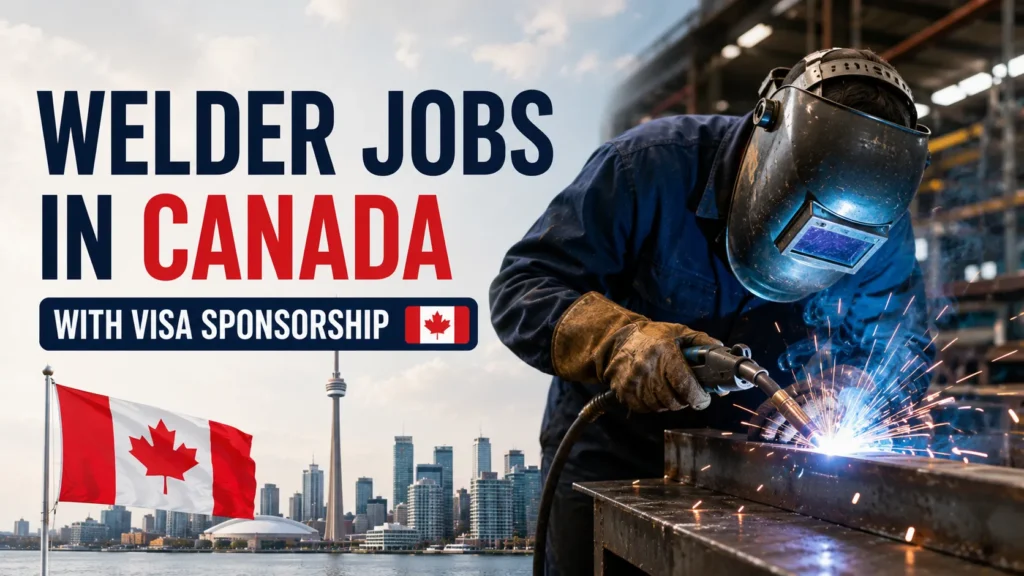
Canada is one of the world’s leading destinations for skilled trades workers due to its strong industrial base, large infrastructure projects, and ongoing labor shortages in technical occupations. Among the most in-demand skilled trades are welding jobs, which play a crucial role in construction, manufacturing, shipbuilding, automotive production, and energy sectors. As a result, Welder Jobs in Canada with Visa Sponsorship 2026 are a strong opportunity for foreign workers seeking stable employment and long-term immigration pathways.
Welders are responsible for joining metal parts using heat, pressure, and specialized equipment. Their work is essential in building infrastructure such as bridges, pipelines, buildings, and machinery. Due to a shortage of skilled labor, employers in Canada are actively hiring international welders and may offer visa sponsorship to qualified candidates through different work permit and immigration programs.
For foreign job seekers, welding jobs in Canada offer competitive wages, strong job security, and clear pathways to permanent residency.
Job Overview
Welders work in industrial and construction environments where precision and safety are essential.
- Job Title: Welder / Fabricator / Welding Technician / Structural Welder
- Country: Canada
- Job Type: Full-Time / Permanent / Contract
- Experience Required: 1–5 years preferred (entry-level apprentices may also apply)
- Education Requirement: High school diploma or vocational welding certification preferred
- Visa Sponsorship: Available through selected employers and immigration programs
- Work Locations: Construction sites, factories, shipyards, oil & gas facilities
- Salary Range: CAD $45,000 – $85,000 per year depending on experience and certification
Highly skilled welders, especially in offshore or industrial sectors, can earn significantly more.
Why Welder Jobs Are in Demand in Canada
The demand for welders in Canada continues to grow due to industrial expansion and workforce shortages.
Key reasons include:
- Large-scale infrastructure development projects
- Expansion of oil, gas, and energy industries
- Growth in manufacturing and metal fabrication
- Aging workforce in skilled trades
- Increased construction of bridges, roads, and buildings
- High demand in mining and shipbuilding industries
- Expansion of transportation and pipeline systems
- Skilled labor shortages across provinces
Because welding requires technical training and hands-on experience, employers often recruit foreign workers to fill critical gaps.
Types of Welder Jobs in Canada
Welding jobs vary depending on industry and specialization.
Structural Welder
Works on buildings, bridges, and steel frameworks in construction projects.
Pipe Welder
Specializes in welding pipelines used in oil, gas, and water systems.
Industrial Welder
Works in factories producing machinery, equipment, and heavy tools.
Automotive Welder
Focuses on vehicle manufacturing and repair welding tasks.
Underwater Welder
Highly specialized role involving welding in marine environments (very high salary and strict certification requirements).
Job Responsibilities
Welders perform technical tasks that require precision, safety awareness, and skill.
Common responsibilities include:
- Reading technical drawings and blueprints
- Cutting and shaping metal components
- Operating welding equipment (MIG, TIG, ARC welding)
- Joining metal parts using heat and pressure
- Inspecting weld quality for strength and accuracy
- Repairing damaged metal structures
- Following strict safety procedures
- Maintaining tools and welding machines
- Measuring and aligning metal parts
- Working with fabrication teams and engineers
Also Check: Community Support Worker Jobs in Canada with Visa Sponsorship 2026
Salary and Benefits
Welder jobs in Canada offer strong wages compared to many other countries.
Typical benefits include:
- Annual salary between CAD $45,000 and $85,000
- Overtime pay for extra hours
- Health insurance and medical coverage
- Paid vacation and public holidays
- Retirement and pension contributions (in some roles)
- Safety equipment provided by employers
- Training and certification support
- Visa sponsorship opportunities
- Job stability in skilled trades
- Career advancement into supervisory roles
Experienced welders with certifications (such as CWB certification) earn significantly higher wages.
Visa Sponsorship Process in Canada
Foreign workers typically need a work permit or immigration pathway to work legally in Canada.
Step 1: Job Offer
Secure a job offer from a Canadian employer willing to hire foreign welders.
Step 2: LMIA Approval
In many cases, the employer applies for a Labour Market Impact Assessment (LMIA) to hire a foreign worker.
Step 3: Work Permit Application
The worker applies for a Canadian work permit using the job offer and LMIA approval.
Step 4: Document Submission
Applicants provide:
- Valid passport
- Welding certificates or trade qualifications
- Work experience proof
- Employment contract
- Medical and background checks
Step 5: Approval
Once approved, the worker receives authorization to work in Canada.
Step 6: Travel and Employment
The worker relocates and begins work with the sponsoring employer.
Many welders later apply for permanent residency through immigration programs such as Express Entry or Provincial Nominee Programs.
Requirements for Welder Jobs in Canada
Employers require technical skills and safety awareness for welding positions.
Common requirements include:
- Welding certification or vocational training
- 1–5 years of experience preferred
- Knowledge of welding techniques (MIG, TIG, ARC)
- Ability to read technical drawings
- Physical fitness for manual labor
- Understanding of workplace safety standards
- Basic English communication skills
- Attention to detail and precision
- Valid passport for visa processing
Some entry-level apprenticeship opportunities are also available for beginners.
Work Environment in Canada
Welders work in physically demanding and technical environments.
Working conditions include:
- Industrial workshops and outdoor construction sites
- Exposure to heat, sparks, and heavy equipment
- Full-time or shift-based schedules
- Strict safety regulations and protective gear use
- Team-based collaboration with engineers and builders
- Seasonal outdoor work in construction projects
- High focus on precision and quality control
Cities such as Toronto and industrial regions like Alberta and British Columbia offer strong job opportunities.
Benefits of Welder Jobs in Canada
Foreign workers choose Canada for several strong reasons:
- High demand for skilled welders
- Visa sponsorship opportunities
- Competitive international salaries
- Strong worker rights and protections
- Pathway to permanent residency
- Stable long-term employment
- Access to healthcare and social benefits
- Career advancement opportunities
- Multicultural work environment
- Opportunities in multiple industries
Canada is considered one of the best countries for skilled trade immigration.
Challenges of the Job
While rewarding, welding jobs can be physically and mentally demanding.
Common challenges include:
- Exposure to heat, fumes, and sparks
- Long working hours and overtime shifts
- Physically intensive labor
- Working in harsh weather conditions (outdoor sites)
- Strict safety compliance requirements
- High precision and pressure in industrial projects
Despite these challenges, the job offers strong financial stability and immigration opportunities.
How to Apply?
To apply for Welder Jobs in Canada with Visa Sponsorship 2026, follow these steps:
- Prepare a professional CV highlighting welding experience
- Obtain welding certifications if available
- Search for Canadian construction and manufacturing employers
- Apply for jobs offering LMIA sponsorship
- Attend interviews (online or in person)
- Receive a job offer and contract
- Apply for a Canadian work permit
- Complete relocation process
- Start working in Canada
- Click Apply Now to get started
Candidates with certifications and proven experience have the highest chance of selection.
Final Thoughts
Welder Jobs in Canada with Visa Sponsorship 2026 offer one of the best opportunities for skilled trades workers seeking international employment. With strong demand, competitive salaries, and immigration pathways, Canada remains a top destination for welders worldwide.
These roles provide long-term job security, financial stability, and a direct pathway to permanent residency. For experienced and skilled welders, Canada offers an excellent chance to build a successful and stable future in the skilled trades industry.