
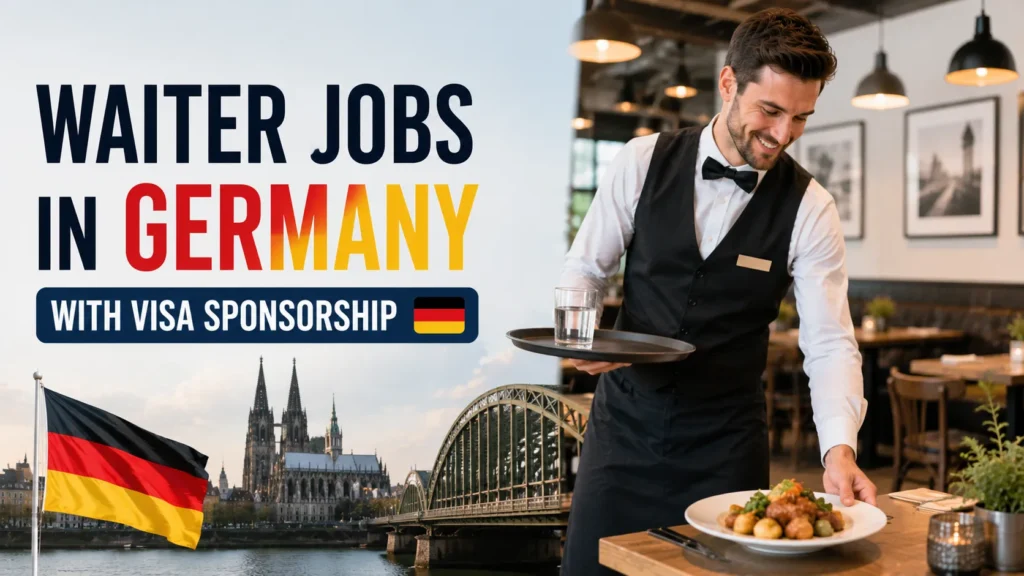
Germany is one of Europe’s strongest economies and a global hub for tourism, hospitality, and food service industries. With thousands of restaurants, hotels, cafés, and event venues across the country, the demand for skilled and entry-level hospitality workers continues to grow. As a result, Waiter Jobs in Germany with Visa Sponsorship 2026 are becoming a valuable opportunity for foreign job seekers looking for stable employment and long-term career growth in Europe.
Waiters play an important role in providing customer service, serving food and beverages, taking orders, and ensuring guests have a pleasant dining experience. Due to ongoing labor shortages in the hospitality sector, employers in Germany are increasingly open to hiring international workers and may offer visa sponsorship to qualified candidates.
For foreign applicants, waiter jobs in Germany offer entry-level accessibility, competitive salaries, and a pathway into Europe’s hospitality industry.
Job Overview
Waiters work in fast-paced environments where customer service and communication are essential.
- Job Title: Waiter / Waitress / Restaurant Server / Food Server
- Country: Germany
- Job Type: Full-Time / Part-Time / Shift-Based
- Experience Required: 0–3 years (entry-level positions available)
- Education Requirement: No formal degree required
- Visa Sponsorship: Available with selected hospitality employers
- Work Locations: Restaurants, hotels, cafés, bars, catering companies
- Salary Range: €22,000 – €35,000 per year (excluding tips in many cases)
In many establishments, tips significantly increase total monthly income, especially in tourist-heavy cities.
Why Waiter Jobs Are in Demand in Germany
The hospitality industry in Germany continues to grow due to several key factors.
Main reasons include:
- Strong tourism industry across major cities
- High number of restaurants and hotels
- Growth of international cuisine and dining culture
- Labor shortages in service and hospitality jobs
- Increasing number of cafés and fast-casual dining outlets
- Expansion of event and catering services
- Seasonal tourism in cities and rural destinations
- Aging workforce in hospitality sector
Because waiter jobs involve irregular hours, fast-paced work, and customer interaction, employers often rely on foreign workers to fill staffing gaps.
Types of Waiter Jobs in Germany
Waiter roles vary depending on the workplace and level of experience.
Restaurant Waiter
Works in restaurants taking orders, serving meals, and handling customer requests.
Hotel Waiter
Provides service in hotel restaurants, room service, and banquet events.
Café Server
Works in cafés serving drinks, pastries, and light meals.
Event Waiter
Supports weddings, conferences, and large events with food and beverage service.
Fine Dining Waiter
Works in high-end restaurants with formal service standards and premium customer interaction.
Job Responsibilities
Waiters perform essential duties to ensure smooth food service and customer satisfaction.
Common responsibilities include:
- Greeting and seating customers
- Taking food and drink orders
- Serving meals and beverages
- Explaining menu items to guests
- Handling customer questions and requests
- Ensuring tables are clean and well-prepared
- Processing payments and bills
- Coordinating with kitchen staff
- Maintaining hygiene and service standards
- Handling complaints professionally
Strong communication, multitasking, and teamwork skills are essential for this role.
Salary and Benefits
Waiter jobs in Germany offer stable income and additional earnings through tips.
Typical benefits include:
- Annual salary between €22,000 and €35,000
- Tips (often a significant extra income source)
- Paid vacation and public holidays
- Overtime pay for extra shifts
- Free or discounted meals during shifts
- Uniforms provided by employers
- Health insurance and social security coverage
- Visa sponsorship opportunities
- Training and skill development
- Career progression to supervisor roles
Also Check: Parcel Sorter Jobs in Germany with Visa Sponsorship 2026
Visa Sponsorship Process in Germany
Foreign workers generally require a work permit to work legally in Germany.
Step 1: Job Offer
Secure a job offer from a German employer willing to sponsor foreign workers.
Step 2: Work Permit Application
The employer supports the application for a German work visa or residence permit.
Step 3: Document Submission
Applicants must provide:
- Valid passport
- Updated CV
- Proof of hospitality or service experience (if available)
- Employment contract
- Basic identification documents
Step 4: Government Review
German authorities assess labor market conditions and eligibility.
Step 5: Approval
Once approved, the worker receives legal permission to live and work in Germany.
Step 6: Relocation
The worker moves to Germany and starts employment with the sponsoring employer.
Requirements for Waiter Jobs in Germany
Waiter roles are accessible, but employers still expect basic skills and professionalism.
Common requirements include:
- No formal education required
- Basic experience in hospitality (preferred but not required)
- Good communication and customer service skills
- Ability to work shifts, weekends, and holidays
- Physical fitness for standing long hours
- Basic English or German language skills (German is a strong advantage)
- Teamwork and reliability
- Clean and professional appearance
- Valid passport for visa processing
Training is often provided for beginners.
Work Environment in Germany
Waiters work in dynamic hospitality settings with fast-paced service demands.
Working conditions include:
- Indoor restaurant and hotel environments
- Shift-based working hours (day, evening, night)
- Busy peak-hour service periods
- Team-based coordination with kitchen staff
- Customer-facing responsibilities
- High hygiene and service standards
- Weekend and holiday work schedules
- Multicultural workplace environments
Cities such as Berlin offer some of the highest job opportunities due to tourism, nightlife, and international dining demand.
Benefits of Waiter Jobs in Germany
Foreign workers choose Germany for several strong advantages:
- Visa sponsorship opportunities
- Strong labor laws and worker protection
- Stable European employment system
- Fair wages plus tips
- Multicultural working environments
- Paid leave and health insurance
- Career growth opportunities in hospitality
- High demand for service workers
- Access to long-term residence pathways
- Training and skill development
These advantages make Germany a top destination for hospitality workers.
Challenges of the Job
While accessible, waiter jobs can be demanding.
Common challenges include:
- Long standing hours
- Busy and stressful peak service times
- Weekend and holiday shifts
- Handling difficult customers
- Fast-paced multitasking requirements
- Pressure during high-demand seasons
- Physical fatigue from continuous movement
Despite these challenges, the job offers strong income potential and career growth.
How to Apply?
To apply for Waiter Jobs in Germany with Visa Sponsorship 2026, follow these steps:
- Prepare a simple CV highlighting customer service or hospitality experience
- Search for restaurants, hotels, and cafés in Germany
- Apply for entry-level waiter positions
- Focus on employers offering visa sponsorship
- Attend interviews (online or in person)
- Receive a job offer and contract
- Apply for a German work visa with employer support
- Complete relocation process
- Start working in Germany
- Click Apply Now to get started
Candidates with good communication skills and a strong work ethic have the best chances of selection.
Final Thoughts
Waiter Jobs in Germany with Visa Sponsorship 2026 offer an excellent opportunity for foreign workers seeking entry into Europe’s hospitality industry. With strong demand, competitive wages, and visa sponsorship possibilities, Germany remains one of the best destinations for international job seekers.
These roles provide valuable experience, stable income, and long-term career potential. For individuals looking to start a hospitality career abroad, waiter jobs in Germany can be a strong stepping stone toward a successful future in Europe.