
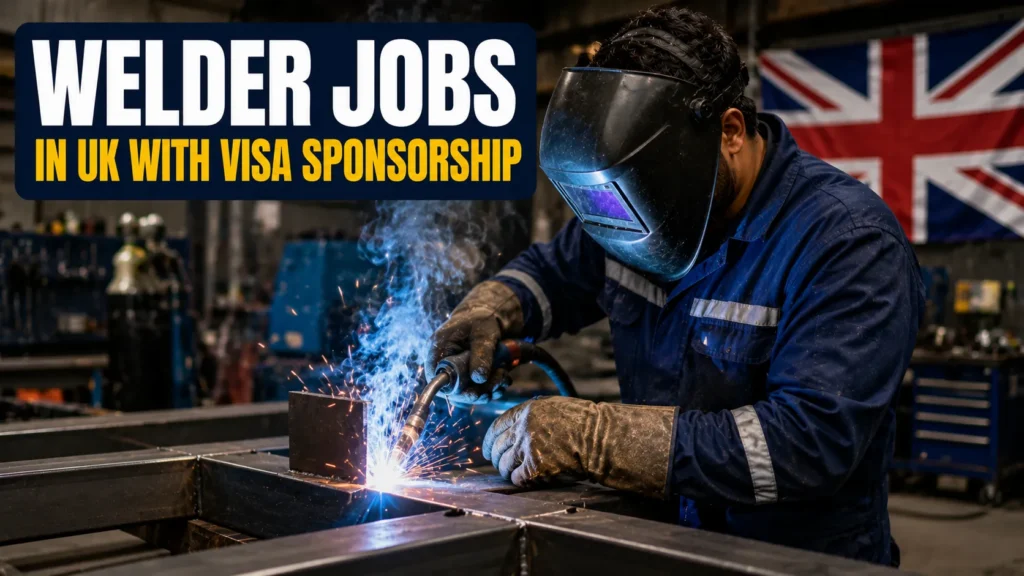
The United Kingdom continues to experience a strong demand for skilled welders across industries such as construction, manufacturing, shipbuilding, oil and gas, automotive, and engineering. As infrastructure projects expand and manufacturing businesses face ongoing labor shortages, many UK employers are actively recruiting qualified international welders through visa sponsorship programs.
Welder Jobs in the UK with Visa Sponsorship 2026 offer excellent career opportunities for skilled workers looking to earn competitive salaries while gaining valuable international experience. Employers often provide sponsorship under the Skilled Worker visa route, along with attractive benefits such as paid holidays, pension contributions, healthcare access, and career development opportunities.
If you have welding experience and are looking to work abroad, the UK can provide a stable and rewarding career path.
Job Overview
Welders join metal components using various welding techniques while ensuring that finished products meet safety and quality standards.
- Job Title: Welder
- Country: United Kingdom
- Job Type: Full-Time
- Experience Required: 1–5 years (depending on employer)
- Education: Trade certification or vocational training preferred
- Visa Sponsorship: Available with eligible employers
- Salary: £28,000–£45,000 per year
- Work Locations: London, Birmingham, Manchester, Leeds, Sheffield, Glasgow, Liverpool, Bristol, Newcastle, and other cities
Highly experienced welders and coded welders can earn even higher salaries depending on their qualifications and industry.
Why Welders Are in Demand in the UK
The UK continues to invest in infrastructure, transportation, renewable energy, and manufacturing. Many companies are experiencing shortages of skilled tradespeople, making welding one of the most sought-after professions.
Several factors contribute to this demand:
- Growth in construction and infrastructure projects
- Expansion of manufacturing industries
- Shipbuilding and marine engineering projects
- Renewable energy developments
- Maintenance of industrial facilities
- Aging skilled workforce nearing retirement
- Increasing investment in engineering and fabrication
Also Check: Demolition Worker Jobs in UK with Visa Sponsorship 2026
Types of Welder Jobs
There are several welding positions available across different industries.
MIG Welder
Uses Metal Inert Gas (MIG) welding for manufacturing, fabrication, and repair work.
TIG Welder
Performs precision welding using Tungsten Inert Gas (TIG), commonly used for stainless steel and aluminum.
Arc Welder
Uses electric arc welding methods for structural steel and heavy industrial projects.
Pipe Welder
Specializes in welding pipelines used in oil, gas, water, and industrial systems.
Structural Welder
Works on bridges, buildings, steel frameworks, and large construction projects.
Fabrication Welder
Cuts, assembles, and welds custom metal products according to engineering drawings.
Coded Welder
Holds industry-recognized welding certifications and performs high-standard welding for specialized industries.
Job Responsibilities
The daily responsibilities of a welder vary depending on the employer and project requirements.
Typical duties include:
- Reading engineering drawings and blueprints
- Preparing metal surfaces before welding
- Operating welding machines safely
- Performing MIG, TIG, or Arc welding
- Measuring and cutting metal components
- Inspecting welds for quality and strength
- Repairing damaged metal structures
- Maintaining welding equipment
- Following workplace safety regulations
- Wearing appropriate protective equipment
- Working with fabrication and engineering teams
- Completing projects within deadlines
Attention to detail and technical skills are essential for producing high-quality welds.
Salary and Employee Benefits
Welder salaries in the UK vary depending on experience, qualifications, industry, and location.
Typical benefits include:
- Annual salary between £28,000 and £45,000
- Skilled Worker visa sponsorship
- Paid annual leave
- Pension contributions
- Access to the National Health Service (NHS)
- Overtime opportunities
- Paid training programs
- Career advancement opportunities
- Uniform and safety equipment
- Stable long-term employment
- Performance bonuses with some employers
Specialist welders working in offshore, aerospace, or heavy engineering sectors often earn higher salaries.
Visa Sponsorship Process
Many UK companies sponsor overseas welders through the Skilled Worker visa route.
Step 1: Search for Sponsored Jobs
Apply for welder vacancies that specifically mention visa sponsorship.
Step 2: Prepare Your CV
Create a professional CV highlighting your welding experience, certifications, technical skills, and previous projects.
Step 3: Attend Interviews
Employers may conduct virtual interviews and ask technical questions regarding welding methods and safety procedures.
Step 4: Receive a Job Offer
Successful candidates receive an employment contract outlining salary, working hours, and employment benefits.
Step 5: Obtain a Certificate of Sponsorship
Your employer provides a Certificate of Sponsorship (CoS), which is required for your Skilled Worker visa application.
Step 6: Apply for the Skilled Worker Visa
Submit your visa application along with the required supporting documents.
Step 7: Travel to the UK
After your visa is approved, you can relocate to the UK and begin your employment.
Requirements
Although requirements differ by employer, most companies look for candidates who possess:
- A valid passport
- Professional welding experience
- Knowledge of MIG, TIG, or Arc welding
- Ability to read technical drawings
- Good English communication skills
- Strong understanding of workplace safety
- Physical fitness for manual work
- Welding certification or vocational training (preferred)
- Attention to detail
- Ability to work independently and as part of a team
Some employers may require coded welding certifications depending on the nature of the work.
Working Environment
Welders work in a variety of industrial settings.
Typical working conditions include:
- Manufacturing plants
- Construction sites
- Engineering workshops
- Shipyards
- Oil and gas facilities
- Fabrication workshops
The work may involve:
- Standing for long periods
- Lifting heavy materials
- Working indoors and outdoors
- Wearing protective clothing and safety equipment
- Exposure to heat, sparks, and industrial machinery
- Following strict health and safety regulations
Advantages of Working as a Welder in the UK
Working in the UK offers numerous benefits for skilled welders.
Some of the major advantages include:
- Employer-sponsored Skilled Worker visa
- Competitive annual salaries
- High demand for skilled trades
- Paid annual holidays
- Pension contributions
- Healthcare access through the NHS
- Opportunities for overtime income
- Modern equipment and advanced workplaces
- Career progression into supervisory or inspection roles
- Potential pathway to long-term residency, depending on eligibility and UK immigration policies
The UK’s engineering and manufacturing sectors provide excellent long-term career prospects for qualified welders.
Challenges of the Job
Like any skilled trade, welding comes with certain challenges.
Common challenges include:
- Physically demanding work
- Working in hot environments
- Standing for extended periods
- Handling heavy equipment
- Strict safety requirements
- Meeting production deadlines
- Working overtime during busy periods
Following safety procedures and maintaining technical skills help welders succeed in this profession.
How to Apply?
If you are interested in Welder Jobs in the UK with Visa Sponsorship 2026, follow these steps:
- Prepare an updated CV highlighting your welding qualifications, certifications, and work experience.
- Search for vacancies on trusted UK job portals, engineering company websites, manufacturing firms, and licensed recruitment agencies.
- Apply only for positions offering Skilled Worker visa sponsorship.
- Attend interviews and technical assessments if required.
- Accept a job offer from an approved UK employer.
- Use the Certificate of Sponsorship provided by your employer to apply for your Skilled Worker visa.
- Travel to the UK after your visa is approved and begin your new career.
- Click Apply Now to get started
Final Thoughts
Welder Jobs in the UK with Visa Sponsorship 2026 offer outstanding opportunities for skilled professionals seeking stable employment, competitive salaries, and international career growth. With increasing demand across construction, manufacturing, engineering, and energy sectors, UK employers continue to recruit experienced welders from around the world. In addition to attractive salaries, workers often benefit from visa sponsorship, paid holidays, healthcare access, pension schemes, and opportunities for career advancement. If you have strong welding skills, relevant certifications, and a commitment to quality workmanship, a welding career in the UK could be the perfect opportunity to build a successful future abroad.