
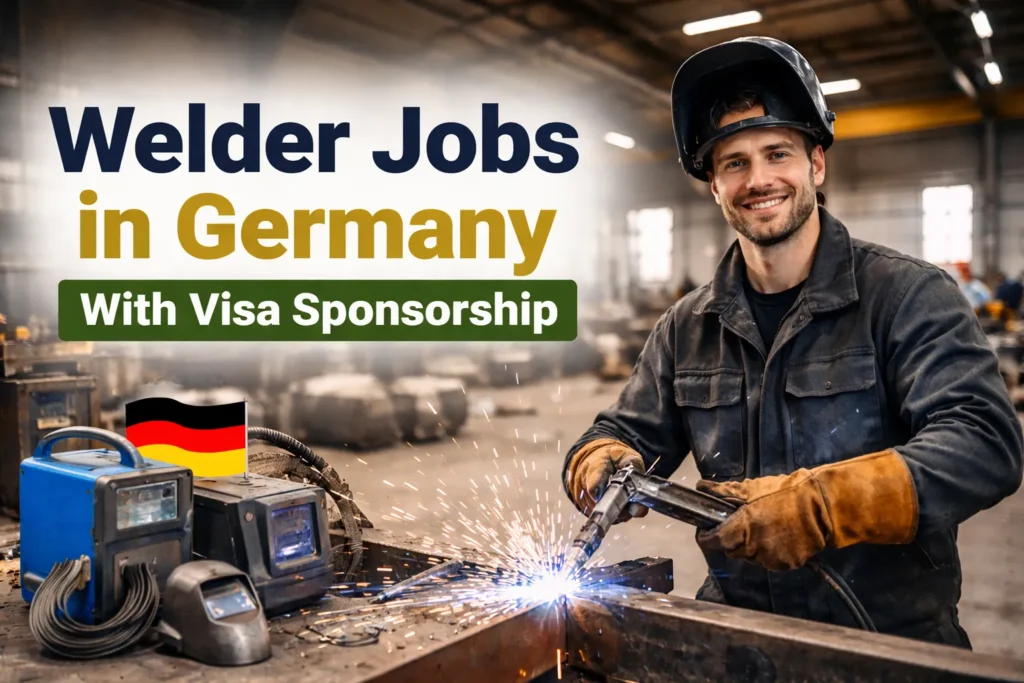
In 2026, welder jobs in Germany are becoming one of the most attractive opportunities for skilled foreign workers seeking visa sponsorship. As Europe’s largest economy, Germany has a strong industrial base that relies heavily on skilled trades, including welding. Due to an aging workforce and increasing industrial demand, the country is facing a shortage of qualified welders across multiple sectors.
From automotive manufacturing to construction and shipbuilding, German companies are actively looking for skilled welders from abroad. With structured visa programs and a strong labor market, foreign workers have a great chance to secure stable employment, competitive salaries, and long-term career prospects.
Job Overview
Welders in Germany are responsible for joining metal parts using various welding techniques in industrial, construction, and manufacturing environments.
- Job Title: Welder / MIG Welder / TIG Welder / Fabricator
- Country: Germany
- Job Type: Full-time / Contract
- Visa Sponsorship: Available (for eligible skilled workers)
- Experience Required: 2–5 years preferred (varies by employer)
- Education Requirement: Technical diploma or welding certification
- Salary Range: €30,000 – €55,000 per year
- Work Environment: Factories, workshops, construction sites
Also Check: Forklift Operator Jobs in Germany with Visa Sponsorship 2026
Why Welders Are in Demand in Germany
Germany’s demand for welders continues to grow due to several key factors:
- Expansion of manufacturing and industrial production
- Growth in the automotive and engineering sectors
- Infrastructure development and construction projects
- Shortage of local skilled tradespeople
- Retirement of experienced workers
Industries across Germany are struggling to find qualified welders locally, which is why many companies are turning to international recruitment and offering visa sponsorship.
Types of Welder Jobs in Germany
1. MIG Welders
These welders use Metal Inert Gas welding for manufacturing and fabrication work.
2. TIG Welders
TIG welders handle precision welding tasks, often in aerospace and automotive industries.
3. Arc Welders
They use electric arc welding for heavy construction and industrial projects.
4. Pipe Welders
These specialists work on pipelines, oil and gas systems, and industrial piping.
5. Structural Welders
They focus on welding steel frameworks used in buildings and infrastructure.
Each specialization requires different levels of skill and certification.
Job Responsibilities
Welders in Germany perform a variety of technical tasks, including:
- Reading and interpreting blueprints and technical drawings
- Preparing metal surfaces for welding
- Operating welding equipment and tools
- Joining metal components using different welding techniques
- Inspecting welds for quality and safety
- Repairing damaged metal structures
- Following safety regulations and industry standards
- Maintaining equipment and tools
Attention to detail, precision, and safety awareness are essential qualities for welders.
Visa Sponsorship Options
Foreign welders can apply through several German visa pathways:
1. EU Blue Card
For highly skilled workers with recognized qualifications and job offers meeting salary requirements.
2. Skilled Worker Visa
Designed for qualified professionals with vocational training and a job offer in Germany.
3. Job Seeker Visa
Allows individuals to enter Germany and search for employment within a limited period.
4. Employer-Sponsored Work Visa
Many companies directly sponsor foreign welders when they cannot find local talent.
The Skilled Worker Visa is the most common route for welders in Germany.
Salary Expectations
Welders in Germany earn competitive wages depending on their experience and specialization:
- Entry-level: €30,000 – €38,000 per year
- Mid-level: €38,000 – €45,000 per year
- Experienced welders: €45,000 – €55,000+ per year
Additional benefits may include:
- Overtime pay
- Health insurance
- Paid annual leave
- Pension contributions
- Shift allowances (for night or weekend work)
Salaries may vary depending on location, industry, and skill level.
Requirements for Welder Jobs
To work as a welder in Germany with visa sponsorship, candidates typically need:
- Recognized welding certification or technical qualification
- 2–5 years of relevant work experience
- Basic knowledge of the German language (often required)
- Ability to pass a skills assessment or trade test
- Understanding of safety and welding standards
- Physical fitness for manual labor
- Valid work visa or eligibility for sponsorship
In many cases, foreign qualifications must be recognized under German standards.
Top Industries Hiring Welders
1. Automotive Industry
Germany’s world-famous car manufacturing sector heavily relies on skilled welders.
2. Construction Sector
Infrastructure and building projects require structural welding expertise.
3. Shipbuilding Industry
Ports and shipyards need welders for vessel construction and repairs.
4. Manufacturing and Engineering
Factories producing machinery and equipment require welding specialists.
5. Energy Sector
Power plants and pipelines depend on skilled welding work.
These industries ensure consistent demand for welders across the country.
Work Conditions
Welders in Germany typically work in:
- Indoor factories or outdoor construction sites
- Full-time roles with shift work in some industries
- Physically demanding environments
- Conditions involving heat, noise, and protective gear
- Team-based work settings
Strict safety regulations are enforced to ensure worker protection.
Benefits of Working as a Welder in Germany
Welder jobs in Germany offer several advantages:
- Strong demand for skilled workers
- Competitive salary and benefits
- Opportunities for visa sponsorship
- Access to Europe’s largest economy
- High workplace safety standards
- Career growth and specialization options
- Pathway to long-term residence and stability
Germany provides a stable and secure environment for skilled tradespeople.
How to Apply?
To apply for welder jobs in Germany:
- Search for jobs on German job portals and company websites
- Apply through recruitment agencies specializing in industrial jobs
- Prepare a professional CV highlighting your welding experience
- Get your qualifications recognized if required
- Apply for visa-sponsored positions
- Attend interviews (online or in-person)
- Secure a job offer and begin the visa process
- Click Apply Now to get started
Ensure that the employer is legitimate and authorized to hire foreign workers.
Challenges of Working in Germany
While opportunities are strong, there are some challenges:
- Language barrier (basic German is often required)
- Strict certification and qualification recognition
- Adapting to German work culture
- Physically demanding job conditions
- Competition for high-paying roles
However, with preparation and training, these challenges can be managed successfully.
Final Thoughts
Welder jobs in Germany with visa sponsorship in 2026 offer excellent opportunities for skilled foreign workers. With strong demand across automotive, construction, and manufacturing sectors, qualified welders can secure stable employment and attractive salaries.
Although the process requires certification, language skills, and experience, the long-term benefits are significant. For skilled tradespeople looking to build a successful international career, Germany remains one of the top destinations in Europe.