
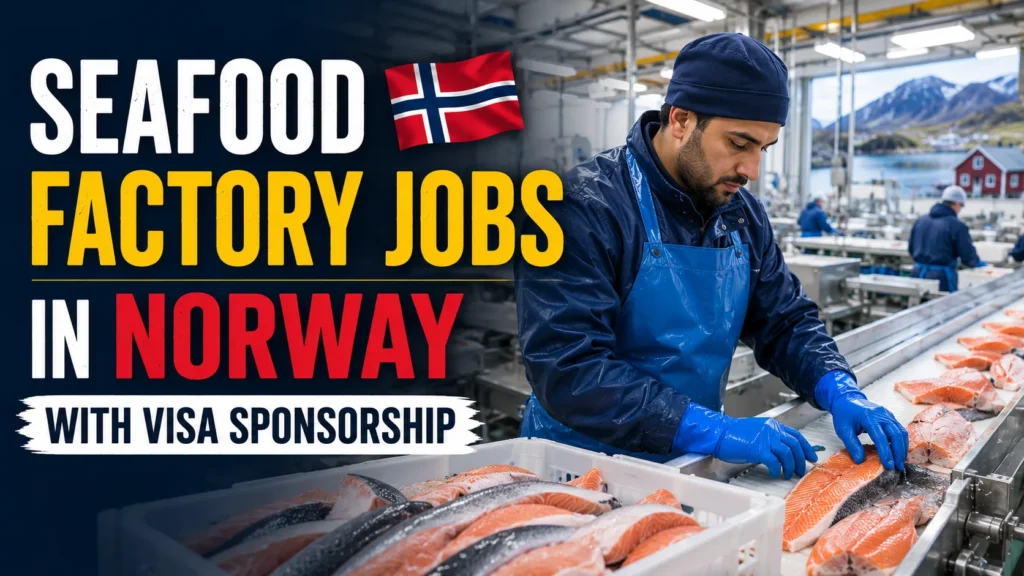
Seafood factory jobs in Norway with visa sponsorship are expected to remain in high demand in 2026, especially among foreign workers looking for stable employment in Europe’s strong seafood export industry. Norway is one of the world’s largest exporters of salmon, cod, and other seafood products, and its processing industry plays a key role in the national economy.
Because seafood production runs throughout the year and requires large manpower for processing, packaging, and quality control, many Norwegian employers hire international workers. For eligible candidates, these jobs can offer steady income, structured training, and in some cases employer-sponsored work visas.
Job Overview
Seafood factory workers are involved in processing, cleaning, packaging, and preparing fish and seafood products for local and international markets.
- Job Title: Seafood Factory Worker / Fish Processing Worker / Production Operator
- Country: Norway
- Job Type: Full-time / Shift-based / Seasonal or Permanent
- Experience Required: Not required (training provided)
- Education Requirement: Basic education preferred
- Visa Type: Seasonal Worker Visa or Employer-Sponsored Work Permit
- Work Environment: Seafood processing plants, cold storage facilities, factories near coastal regions
- Salary Range: NOK 190 – NOK 260 per hour (varies by role and experience)
Many employers also provide overtime pay, shift allowances, and sometimes accommodation or transport support for foreign workers.
Why Seafood Factory Jobs Are in Demand in Norway
Norway has a highly developed seafood industry that exports to markets worldwide. The demand for workers continues to grow due to several factors:
- Large-scale salmon farming and fish harvesting operations
- High export demand for Norwegian seafood products
- Continuous year-round processing in factories
- Labor shortages in manual industrial roles
- Expansion of aquaculture and seafood production facilities
Also Check: Fruit Picking Jobs in Norway with Visa Sponsorship 2026
Major Companies Hiring Seafood Workers
Several large seafood companies regularly hire workers, including foreign applicants:
- Mowi ASA
- Leroy Seafood Group
- SalMar ASA
- Grieg Seafood
- Norway Seafood AS
These companies operate modern processing plants and aquaculture facilities and may offer visa sponsorship depending on labor needs and contracts.
Types of Seafood Factory Jobs Available
There are several roles available in seafood processing plants.
Fish Processing Worker
Handles cleaning, cutting, filleting, and preparing fish for packaging and export.
Production Line Worker
Works on conveyor belts sorting, processing, and packaging seafood products.
Quality Control Assistant
Ensures seafood products meet hygiene, safety, and export quality standards.
Packaging Worker
Packages frozen or fresh seafood for domestic and international shipping.
Cold Storage Worker
Manages storage of seafood products in refrigerated or frozen environments.
Each role supports the overall production process and ensures product quality and safety.
Job Responsibilities
Seafood factory workers perform a variety of manual and machine-assisted tasks, including:
- Processing raw fish into export-ready products
- Operating cutting, filleting, and packaging machines
- Inspecting seafood for quality and freshness
- Packing and labeling products for shipment
- Maintaining hygiene and cleanliness standards
- Cleaning work areas and equipment
- Following strict food safety regulations
- Assisting with storage and logistics operations
Attention to detail is very important in this industry because seafood products must meet strict international standards.
Salary Expectations
Wages in seafood factories vary depending on job role and experience.
- Entry-level workers: NOK 190 – NOK 210 per hour
- Experienced workers: NOK 210 – NOK 240 per hour
- Skilled machine operators: NOK 240 – NOK 260+ per hour
Additional benefits may include:
- Overtime pay (higher hourly rates)
- Night shift allowances
- Paid holidays and sick leave
- Safety training and protective gear
- Accommodation support in some cases
Workers often increase their earnings through extra shifts during peak production seasons.
Visa Sponsorship Options
Foreign workers need legal authorization to work in Norway. Common visa options include:
Seasonal Work Visa
Used for short-term employment in seafood processing during peak production seasons.
Skilled Worker Permit
For experienced workers or those offered long-term contracts.
Employer Sponsorship
Many seafood companies sponsor visas after offering a confirmed job contract.
A valid job offer is always required before applying for a work visa.
Requirements for Seafood Factory Jobs
These jobs are generally entry-level but still require basic conditions:
- Basic English communication skills
- Ability to work in cold environments
- Physical fitness for standing and repetitive work
- Willingness to work shifts (day/night)
- Teamwork and discipline
- Clean background record
- Valid passport
- Job offer from a Norwegian employer
No formal experience is usually required, as training is provided on the job.
Work Conditions in Norway
Seafood processing plants in Norway operate under strict safety and labor regulations.
- 35–45 working hours per week
- Rotating shift schedules
- Cold and wet working environments
- Fast-paced production lines
- High hygiene and food safety standards
Employers provide safety gear such as gloves, boots, and protective clothing.
Benefits of Seafood Factory Jobs
These jobs offer several advantages for foreign workers:
- Stable and consistent employment
- No advanced education required
- High demand in the seafood export industry
- Opportunity to earn overtime income
- International work experience
- Potential pathway to long-term employment
Many workers use these roles as an entry point into Europe’s industrial job market.
Challenges of the Job
Seafood factory work can be physically demanding:
- Cold working environments
- Repetitive manual tasks
- Standing for long hours
- Shift-based schedules including nights
- Strong smell of seafood in processing areas
However, proper training and safety systems help workers adjust quickly.
How to Apply?
The application process is straightforward but must be done carefully:
- Search job openings on official company websites or job portals
- Apply directly or through licensed recruitment agencies
- Prepare a simple CV highlighting basic skills
- Attend online or in-person interviews
- Receive a job offer from an employer
- Employer applies for visa sponsorship
- Complete medical checks and relocation process
- Click Apply Now
Always ensure you apply through verified and legitimate employers.
Career Growth Opportunities
With experience, workers can move into higher positions such as:
- Machine Operator
- Quality Control Technician
- Production Supervisor
- Maintenance Assistant
- Team Leader
The seafood industry in Norway offers long-term growth opportunities for dedicated workers.
Final Thoughts
Seafood factory jobs in Norway with visa sponsorship in 2026 provide a strong opportunity for foreign workers seeking stable employment in a globally respected industry. With major companies like Mowi ASA and other seafood exporters continuing to expand, demand for workers remains steady.
For individuals who are hardworking, adaptable, and willing to work in industrial environments, seafood factory jobs can offer reliable income, international experience, and a pathway toward long-term employment in Norway’s growing seafood sector.