
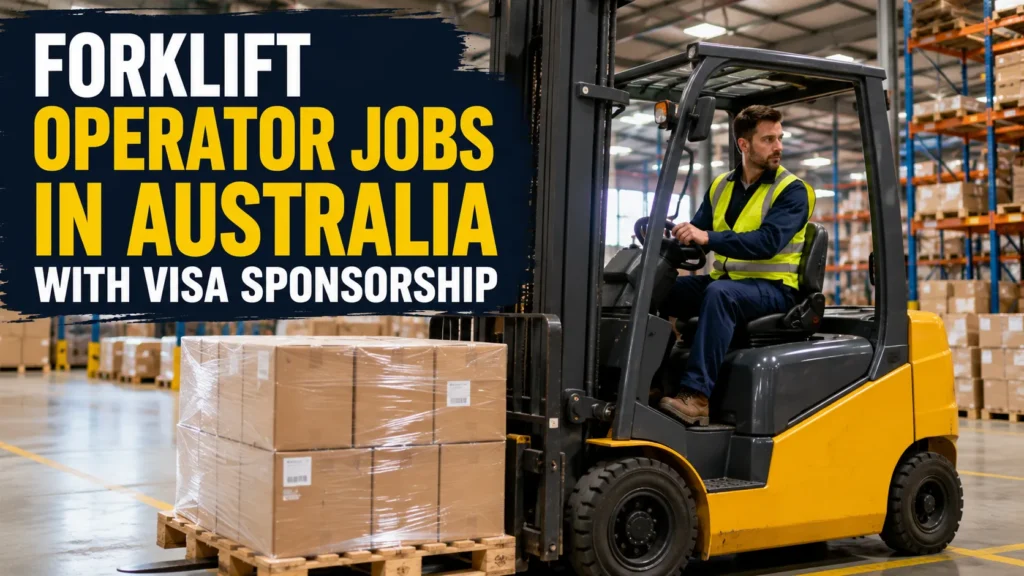
Australia continues to offer employment opportunities in warehousing, logistics, manufacturing, construction, retail distribution, agriculture, and supply chain operations. Forklift operators play an important role in moving, loading, unloading, and storing goods safely and efficiently. They operate forklifts and other material-handling equipment to transport pallets, boxes, raw materials, and finished products around warehouses, factories, distribution centres, and industrial sites.
Some Australian employers may recruit qualified international workers who meet the required employment, skills, licensing, and immigration conditions. As a result, Forklift Operator Jobs in Australia with Visa Sponsorship 2026 may provide opportunities for overseas applicants seeking warehouse and logistics employment and international work experience.
Job Overview
Forklift operators safely operate forklifts and material-handling equipment to move and organise goods, products, and materials in warehouses, factories, distribution centres, and other workplaces.
Job Title: Forklift Operator / Forklift Driver / Warehouse Forklift Operator / Material Handler / Warehouse Operative
Country: Australia
Job Type: Full-Time or Part-Time
Experience Required: Previous forklift or warehouse experience preferred
Education Required: High school education or relevant warehouse training is an advantage
Visa Sponsorship: Available with selected employers, subject to Australian visa, employment, and licensing requirements
Work Locations: Sydney, Melbourne, Brisbane, Perth, Adelaide, Canberra, Gold Coast, Hobart, Darwin, and other locations across Australia
Salary: Approximately AUD 55,000–75,000 per year, depending on experience, qualifications, employer, location, working hours, shift patterns, and responsibilities.
Some employers may also provide paid annual leave, superannuation contributions, overtime pay, shift allowances, uniforms, safety equipment, and professional training.
Why Forklift Operators Are Needed in Australia
Australia has a large logistics and supply chain industry that depends on warehouses, distribution centres, manufacturing facilities, supermarkets, retailers, and transport companies. Forklift operators help businesses move goods quickly and safely throughout their operations.
Several factors contribute to employment opportunities:
- Growth of warehousing and logistics
- Expansion of e-commerce
- Increasing demand for distribution centres
- Growth of manufacturing operations
- Retail supply chain requirements
- Import and export activities
- Construction and industrial projects
- Agricultural and food distribution operations
Also Check: Accountant Jobs in Australia with Visa Sponsorship 2026
Types of Forklift Operator Jobs Available
Australian employers may recruit forklift operators for different industries and workplaces.
Warehouse Forklift Operator
Warehouse forklift operators move pallets, cartons, and other products around storage facilities. They may also load and unload delivery vehicles.
Distribution Centre Forklift Operator
Distribution centre workers handle large volumes of goods and help move products between receiving, storage, and dispatch areas.
Manufacturing Forklift Operator
Manufacturing facilities employ forklift operators to transport raw materials, equipment, and finished products around production sites.
Cold Storage Forklift Operator
Cold storage workers operate forklifts in refrigerated warehouses where food, beverages, and other temperature-sensitive products are stored.
Construction Forklift Operator
Construction-related forklift operators may move building materials, equipment, and supplies around construction and industrial sites, subject to the required workplace qualifications and licences.
Job Responsibilities
Daily responsibilities vary depending on the employer and workplace, but common duties include:
- Operating forklifts safely
- Loading and unloading delivery vehicles
- Moving pallets and materials
- Storing goods in designated locations
- Collecting products for orders
- Checking loads before transportation
- Maintaining accurate inventory movements
- Inspecting forklifts before use
- Reporting equipment problems
- Following warehouse safety procedures
- Keeping work areas organised
- Supporting warehouse and logistics teams
- Following manual handling procedures
- Completing basic workplace records
Forklift operators must remain alert, follow safety procedures, and operate equipment responsibly to protect themselves, colleagues, products, and workplace property.
Salary and Employee Benefits
Forklift operator jobs in Australia offer employment packages that vary according to experience, qualifications, location, employer, and working schedule.
Common benefits may include:
- Annual salary between AUD 55,000 and AUD 75,000
- Visa sponsorship support for eligible international workers
- Paid annual leave
- Superannuation contributions
- Overtime pay
- Night shift allowances
- Weekend or public holiday penalty rates, where applicable
- Work uniforms and protective equipment
- Professional training opportunities
Some employers may also offer relocation assistance, transportation support, employee discounts, or other workplace benefits. These benefits depend entirely on the employer and should be confirmed before accepting a position.
Visa Sponsorship Process
International applicants generally require legal permission to work in Australia before beginning employment. The exact process depends on the applicant’s nationality, occupation, qualifications, employer, salary, and current Australian immigration regulations.
Step 1: Apply for Forklift Operator Jobs
Search for vacancies through warehouses, logistics companies, distribution centres, manufacturing businesses, transport companies, recruitment agencies, and other employers that may legally sponsor eligible overseas workers.
Step 2: Receive a Job Offer
Successful applicants receive an employment contract outlining the position, salary, working hours, job duties, and employment conditions.
Step 3: Employer Supports the Visa Process
Where the position and applicant are eligible, the employer may provide sponsorship or nomination support under an applicable Australian visa pathway.
Step 4: Submit Required Documents
Applicants may generally need to provide:
- Valid passport
- Updated CV
- Employment references
- Proof of forklift operating experience
- Relevant forklift licence or certification
- Warehouse training certificates, if available
- English language evidence, where required
- Signed employment contract
- Police clearance documents, if required
- Health examinations, if required
- Completed visa application forms
Step 5: Visa Application Review
The relevant Australian authorities assess the application and determine whether the applicant and position meet the applicable visa requirements.
Step 6: Travel to Australia
After receiving the required visa approval, the employee can make travel arrangements and complete any necessary arrival and immigration procedures.
Step 7: Begin Employment
The forklift operator starts work according to the terms of the employment agreement and approved visa conditions.
Applicants should always verify current Australian visa, sponsorship, employment, and forklift licensing requirements before applying.
Requirements for Forklift Operator Jobs
Most employers seek applicants with some of the following qualifications:
- Valid passport
- Previous forklift operating experience
- Valid forklift licence or relevant certification
- Warehouse or logistics experience
- Good physical fitness
- Ability to operate machinery safely
- Good hand-eye coordination
- Strong attention to detail
- Ability to follow safety instructions
- Reliable and responsible attitude
- Basic communication skills
- Ability to work as part of a team
Forklift licensing requirements are particularly important in Australia. Applicants should check the specific licensing and high-risk work requirements applicable to the type of forklift and position they are applying for.
Skills That Improve Your Chances
Applicants with the following skills may have stronger employment prospects:
- Forklift operation
- Pallet handling
- Warehouse operations
- Loading and unloading
- Inventory management
- Stock control
- Order picking
- Workplace safety
- Manual handling
- Basic computer skills
- Warehouse management systems
- Time management
- Teamwork and communication
Experience operating different types of forklifts or material-handling equipment can strengthen an application, provided the worker has the required qualifications and authorisations.
Working Conditions
Forklift operators typically work in warehouses, distribution centres, factories, storage facilities, and industrial environments. The job may involve standing for long periods, operating machinery, lifting lighter items, and working around other vehicles and warehouse equipment.
Typical workplaces include:
- Warehouses
- Distribution centres
- Manufacturing facilities
- Retail storage facilities
- Cold storage facilities
- Logistics companies
- Transport and freight businesses
- Construction and industrial sites
- Agricultural storage facilities
Many warehouses and distribution centres operate for extended hours or around the clock. Workers may therefore be required to complete morning, evening, night, weekend, or public holiday shifts.
Advantages of Working in Australia
Australia offers several potential benefits for eligible international forklift operators.
These include:
- Opportunities in warehousing and logistics
- Competitive wages
- Professional working environments
- Paid annual leave
- Superannuation benefits
- Overtime and shift allowances
- Professional training opportunities
- Multicultural workplaces
- Career development opportunities
- Valuable international work experience
With additional experience and training, forklift operators may progress into senior warehouse roles, team leader positions, warehouse supervisor jobs, inventory control, logistics coordination, or supply chain management.
How to Apply?
If you are interested in Forklift Operator Jobs in Australia with Visa Sponsorship 2026, follow these steps:
- Prepare a professional CV highlighting your forklift operation, warehouse, logistics, and material-handling experience.
- Gather copies of your passport, forklift licence, training certificates, employment references, and other relevant documents.
- Check whether your forklift licence or qualifications meet Australian workplace requirements.
- Search for vacancies through reputable Australian logistics companies, warehouses, distribution centres, manufacturing businesses, transport companies, and recruitment agencies.
- Submit your application with all required documents.
- Attend interviews, skills assessments, or practical tests if shortlisted.
- Click Apply Now to get started
Final Thoughts
Forklift Operator Jobs in Australia with Visa Sponsorship 2026 may provide opportunities for experienced international workers seeking employment in Australia’s growing warehousing, logistics, manufacturing, and supply chain sectors. Warehouses, distribution centres, factories, retail businesses, transport companies, and industrial facilities require skilled operators to move goods and materials safely and efficiently. Competitive wages, paid holidays, superannuation contributions, overtime opportunities, shift allowances, professional training, and career development can make these positions attractive to eligible applicants.