
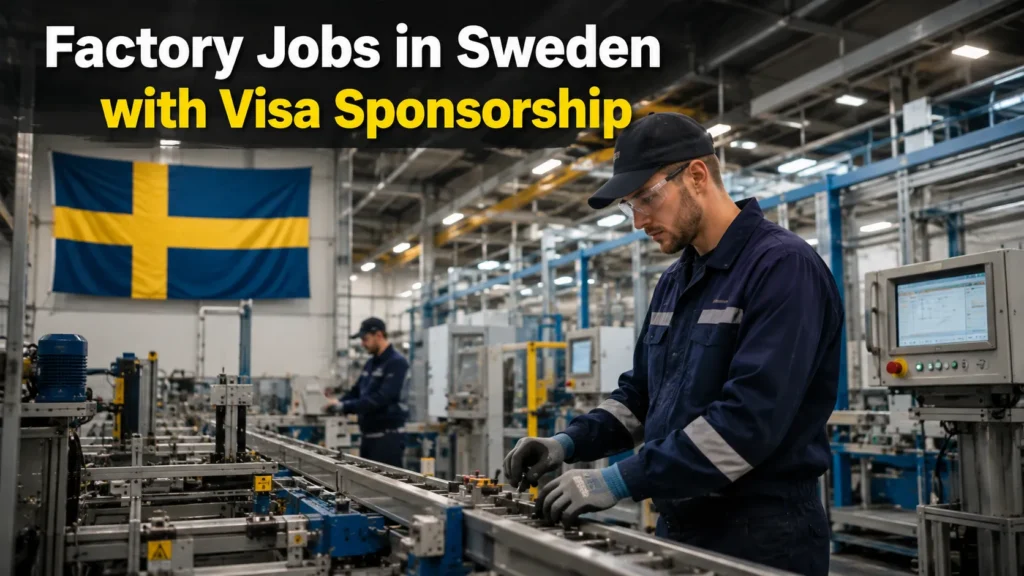
Sweden has a strong manufacturing and industrial sector supported by automotive companies, food processing plants, engineering businesses, electronics manufacturers, packaging facilities, and other production industries. Factories need workers to operate machinery, assemble products, package goods, inspect quality, maintain equipment, and keep production lines running efficiently.
Factory Jobs in Sweden with Visa Sponsorship 2026 may interest overseas workers with experience in manufacturing, production, machine operation, assembly, packaging, warehouse work, maintenance, welding, food processing, or quality control. Available positions can include production workers, machine operators, factory assistants, assemblers, packers, welders, maintenance workers, and production supervisors.
However, applicants from outside the EU/EEA should understand that Sweden does not have a separate visa sponsorship programme specifically for factory workers. Most non-EU/EEA citizens need an appropriate Swedish work permit before starting employment. The job, salary, employment conditions, and applicant must meet the applicable requirements.
Job Overview
Factory employees perform different tasks depending on the industry, production facility, and position.
Job Title: Factory Worker / Production Worker / Machine Operator / Assembler / Packer / Maintenance Worker
Country: Sweden
Job Type: Full-Time / Part-Time / Permanent / Seasonal, depending on the employer
Experience Required: Varies by position; previous factory or production experience can be useful
Education Required: Depends on the position
Visa Sponsorship: May be available for eligible candidates, subject to Swedish work-permit requirements
Work Locations: Stockholm, Gothenburg, Malmö, Västerås, Uppsala, Örebro, Linköping, and other industrial areas
Salary: Depends on the position, experience, employer, working hours, and employment agreement
Some employers may provide overtime, shift allowances, workplace training, employee benefits, or other support depending on the position.
Why Factory Workers Are Needed in Sweden
Manufacturing is an important part of Sweden’s economy. The country has well-established industries covering vehicles, machinery, engineering, food products, pharmaceuticals, electronics, timber, packaging, and other manufactured goods.
Factories rely on trained employees to keep production schedules on track. Workers may operate equipment, prepare materials, assemble products, check finished goods, pack orders, or perform maintenance tasks.
Demand can vary between industries and locations. Some factories operate around the clock, which can create opportunities for employees who are willing to work evening, night, weekend, or rotating shifts.
Types of Factory Jobs Available
Production Worker
Production workers assist with manufacturing processes. Their duties may include preparing materials, operating basic equipment, assembling products, checking finished items, and keeping workstations clean.
Machine Operator
Machine operators run production machinery and monitor equipment during manufacturing. They may load materials, adjust machine settings, identify problems, and follow workplace safety procedures.
Factory Assembler
Assemblers put together components or finished products according to company instructions. Attention to detail and the ability to follow technical instructions are important for these roles.
Packaging Worker
Packaging employees prepare products for shipment or storage. They may pack, label, weigh, sort, and inspect products before they leave the factory.
Food Factory Worker
Food processing facilities may employ workers to prepare ingredients, operate production equipment, package food products, clean work areas, and follow strict hygiene procedures.
Maintenance Worker
Factory maintenance workers help keep machinery and production equipment operating safely. Mechanical, electrical, or technical experience can be useful for these positions.
Welder or Fabricator
Skilled factories may recruit welders and fabricators to work with metal components, machinery, structures, and industrial products. Relevant training and experience are normally required.
Quality Control Worker
Quality control employees inspect products and materials to ensure they meet company standards. They may identify defects, record inspection results, and report production issues.
Job Responsibilities
Factory workers may be expected to:
- Operate production machinery
- Assemble products and components
- Prepare raw materials
- Pack and label finished products
- Inspect products for defects
- Follow production instructions
- Maintain clean work areas
- Follow workplace health and safety rules
- Record production information
- Report equipment problems
- Load and unload materials where required
- Work with other production employees
- Meet production targets
- Follow quality-control procedures
- Wear required protective equipment
Also Check: Shop Assistant Jobs in Sweden with Visa Sponsorship 2026
Salary and Employee Benefits
Factory salaries in Sweden vary according to the position, experience, industry, location, employer, working hours, and employment agreement.
An entry-level production worker may earn differently from a skilled machine operator, welder, technician, or production supervisor. Night shifts, weekends, overtime, and other working arrangements may also affect total earnings where additional payments apply.
Sweden’s work-permit rules include minimum salary requirements. For many first-time work-permit applications decided from June 1, 2026, the salary must generally meet the applicable threshold of 90% of Sweden’s median salary, alongside other requirements concerning employment conditions.
Potential benefits may include:
- Regular salary
- Overtime payments where applicable
- Paid annual leave
- Workplace insurance
- Pension benefits
- Shift allowances where applicable
- Training opportunities
- Career development
- Employee discounts or other workplace benefits
Benefits differ between employers and should always be confirmed in the employment contract.
Visa Sponsorship Process
There is no separate Swedish “factory worker visa.” Non-EU/EEA workers generally need a work permit based on employment.
Step 1: Find a Factory Job
Search for genuine vacancies with Swedish manufacturing companies, production facilities, food processing businesses, engineering companies, and industrial employers.
Step 2: Check Your Eligibility
Review the job description, salary, working conditions, qualifications, and other requirements before applying.
Step 3: Prepare Your CV
Create a clear CV highlighting factory experience, machinery skills, production duties, technical qualifications, safety training, and previous employers.
Step 4: Apply for the Position
Apply through the employer’s official recruitment channel or a reputable recruitment agency.
Step 5: Attend an Interview
Employers may ask about your previous factory experience, machine operation, teamwork, safety knowledge, shift availability, and ability to meet production targets.
Step 6: Receive an Employment Contract
If selected, carefully review the contract. Check the salary, working hours, job duties, location, overtime arrangements, and other conditions.
Step 7: Employer Starts the Work-Permit Process
The employer normally provides the necessary employment information and begins the relevant work-permit process.
Step 8: Complete Your Application
The applicant then completes their part of the work-permit application and provides the required documents.
Step 9: Complete Immigration Requirements
Depending on the application, applicants may need to present their passport, provide photographs and fingerprints, and complete other required procedures.
Requirements for Factory Jobs
Requirements vary between employers and positions, but applicants may generally need:
- Previous factory or production experience
- Ability to work shifts
- Good teamwork skills
- Basic communication skills
- Physical ability for manual work
- Good attention to detail
- Understanding of workplace safety
- Technical qualifications for skilled positions
- Machine-operation experience where required
- Valid passport
- Genuine employment contract
- Appropriate Swedish work permit
Knowledge of Swedish can be useful, particularly in workplaces where Swedish is commonly used. However, some international manufacturing companies may use English for certain positions.
Seasonal and Shift-Based Factory Jobs
Some production industries experience higher demand during particular periods. Food processing, packaging, agriculture-related production, and other businesses may increase staffing during busy seasons.
Factories may also operate multiple shifts throughout the year. Employees could be scheduled for morning, afternoon, evening, or night shifts depending on the production system.
Applicants should carefully check whether a position is permanent, temporary, or seasonal and confirm the immigration rules that apply to that particular employment.
Working Conditions
Factory work can be physically demanding. Employees may spend several hours standing, walking, lifting materials, operating machinery, or performing repetitive tasks.
Workers must follow safety procedures and use protective equipment where required. Some factories can also be noisy or involve temperature-controlled environments, particularly food-processing facilities.
Shift work is common in factories that operate continuously. Employees should therefore be prepared for changing schedules, including evenings, nights, weekends, or public holidays.
Advantages of Working in Swedish Factories
Factory employment can provide valuable industrial experience and opportunities to develop practical skills.
Potential advantages include:
- International work experience
- Manufacturing industry experience
- Technical and machine-operation skills
- Workplace safety training
- Multicultural work environments
- Shift and overtime opportunities where available
- Career development
- Opportunities to move into skilled positions
- Experience with modern production systems
Experienced workers may progress into machine-operation, quality-control, maintenance, team-leader, or production-supervisor positions.
Apply Now
If you are interested in Factory Jobs in Sweden with Visa Sponsorship 2026, follow these steps to begin your job search:
- Prepare an updated factory or manufacturing CV.
- Mention your previous production or industrial experience.
- List the machinery, tools, or equipment you have used.
- Highlight assembly, packaging, quality-control, or maintenance skills.
- Include relevant technical certificates and safety training.
- Mention your English and Swedish language skills, if applicable.
- Search for genuine Swedish factories and manufacturing companies.
- Check whether the employer accepts applications from non-EU/EEA workers.
- Confirm that the offered salary and employment conditions meet applicable work-permit requirements.
- Apply through the employer’s official recruitment process.
- Prepare for an online or in-person interview.
- Provide references if requested.
- Carefully review the employment contract.
- Confirm the salary, working hours, job duties, location, overtime, and benefits.
- Ask the employer about the work-permit process.
- Complete your part of the immigration application.
- Provide the required passport and supporting documents.
- Complete any required biometric or embassy procedures.
- Wait for the required work authorisation before starting employment.
- Do not pay large upfront fees to anyone promising a guaranteed job or visa.
- Click Apply Now to get started
Applicants should remain alert to recruitment scams. Always verify the employer, job offer, contract, salary, and immigration arrangements before providing sensitive documents or making payments.
Final Thoughts
Factory Jobs in Sweden with Visa Sponsorship 2026 may appeal to overseas workers with experience in production, assembly, machine operation, packaging, food processing, welding, maintenance, and quality control.
Non-EU/EEA applicants should remember that a job offer does not automatically guarantee a Swedish work permit. The employment, salary, working conditions, employer, and applicant must meet the applicable requirements.
Candidates with relevant factory experience, technical skills, safety awareness, and suitable employment offers may have opportunities to pursue manufacturing careers in Sweden. Before accepting an offer or making travel arrangements, carefully verify the employer, employment contract, salary, and current Swedish work-permit requirements.