
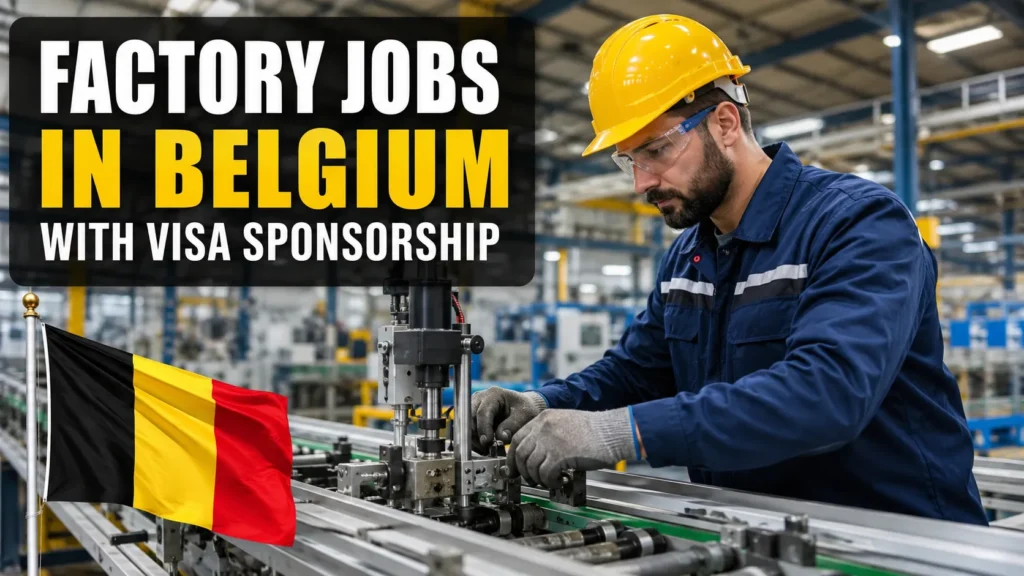
Belgium has a strong manufacturing sector that supports industries such as food processing, pharmaceuticals, chemicals, automotive components, machinery, packaging, and consumer goods. Factories across the country regularly hire workers to assist with production, assembly, packaging, quality control, and warehouse operations. As a result, Factory Jobs in Belgium with Visa Sponsorship 2026 may interest international job seekers looking for stable employment in Belgium’s industrial sector.
Factory workers perform a variety of duties depending on the type of manufacturing facility. Their responsibilities may include operating machinery, assembling products, packaging finished goods, inspecting product quality, moving materials, and maintaining safe production areas. Some entry-level positions offer on-the-job training, while specialized roles may require previous manufacturing experience or technical skills.
International applicants should understand that visa sponsorship is not automatically available for every factory position. Eligibility depends on the employer, the specific occupation, available work permit pathways, and current Belgian immigration regulations.
Job Overview
Factory workers support manufacturing and production operations by helping companies produce, assemble, package, and prepare goods for distribution.
Job Title: Factory Worker / Production Worker / Manufacturing Operative / Factory Hand / Production Operator
Country: Belgium
Job Type: Full-Time / Part-Time / Temporary / Permanent, depending on the employer
Experience Required: Previous manufacturing or production experience may be beneficial, although many entry-level positions provide training
Education Required: Basic education is generally sufficient for many factory roles, while specialized positions may require technical qualifications
Visa Sponsorship: May be available for selected eligible positions, depending on the employer and applicable Belgian immigration requirements
Work Locations: Brussels, Antwerp, Ghent, Liège, Charleroi, Leuven, Bruges, and industrial regions across Belgium
Salary: Varies depending on the employer, industry, experience, location, working hours, and employment conditions
Also Check: Farm Worker Jobs in Belgium with Visa Sponsorship 2026
Why Factory Workers Are Needed in Belgium
Belgium’s manufacturing industry continues to support the country’s economy by producing goods for domestic and international markets. Factories require dependable workers to maintain production schedules, ensure quality standards, and support efficient operations.
The demand for factory workers may vary depending on the industry, region, and production cycles. Some employers increase hiring during periods of business growth or high production demand.
Factors that may contribute to factory employment opportunities include:
- Growth of manufacturing industries
- Food and beverage production
- Pharmaceutical manufacturing
- Packaging and processing operations
- Chemical production
- Machinery manufacturing
- Export-driven industries
- Expansion of industrial facilities
Applicants should carefully review individual vacancies because visa sponsorship opportunities may vary between employers.
Types of Factory Jobs Available
International applicants may find different manufacturing positions depending on their qualifications and experience.
Production Worker
Production workers assist with manufacturing processes by preparing materials, operating equipment, assembling products, and supporting production lines.
Factory Hand
Factory hands perform general duties such as moving materials, cleaning work areas, assisting machine operators, and supporting daily factory operations.
Production Operator
Production operators monitor machinery, control production equipment, and ensure manufacturing processes run efficiently.
Packaging Worker
Packaging workers prepare finished products for shipment by packing, labeling, inspecting, and organizing goods.
Machine Operator
Machine operators operate industrial equipment used in manufacturing. Some positions may require technical training or previous machinery experience.
Quality Control Assistant
Quality control assistants inspect products during and after production to ensure they meet company quality standards.
Job Responsibilities
Factory worker responsibilities vary depending on the employer and manufacturing sector. Common duties may include:
- Operating production machinery
- Assembling products
- Preparing raw materials
- Packing finished goods
- Labeling products
- Inspecting product quality
- Loading and unloading materials
- Maintaining inventory
- Keeping work areas clean
- Following workplace safety procedures
- Recording production information
- Reporting equipment issues
- Working with supervisors and team members
- Meeting production targets
Employees may perform repetitive tasks, stand for long periods, and safely operate machinery while following workplace safety guidelines.
Salary and Employee Benefits
Factory worker salaries in Belgium vary depending on the employer, industry, location, experience, shift schedule, and employment contract. Employees may also receive additional payments for overtime, night shifts, weekends, or public holidays where applicable.
Potential benefits may include:
- Competitive wages
- Overtime payments where applicable
- Shift allowances
- Paid annual leave
- Health insurance benefits
- Training and professional development
- Career advancement opportunities
- Employee assistance programs
The exact salary, working hours, and benefits should always be confirmed through the official job advertisement and employment contract.
Visa Sponsorship Process
Foreign workers who want to work in Belgium must have appropriate work authorization or an eligible work permit. Factory jobs are not automatically eligible for employer sponsorship, so applicants should carefully review the job requirements and immigration regulations.
The process may generally involve:
Step 1: Search for Suitable Jobs
Look for factory vacancies through reputable Belgian job websites, recruitment agencies, and employer career pages.
Step 2: Check Eligibility
Review the job requirements to determine whether your qualifications, experience, and skills match the employer’s expectations and work permit requirements.
Step 3: Prepare Your Application
Create an updated CV highlighting your manufacturing, production, machinery, packaging, or warehouse experience.
Step 4: Attend an Interview
Shortlisted applicants may participate in telephone, online, or face-to-face interviews. Some employers may also conduct practical assessments.
Step 5: Receive a Job Offer
Successful candidates may receive an employment offer outlining salary, working hours, responsibilities, and employment conditions.
Step 6: Confirm Sponsorship or Work Authorization
International applicants should verify whether the employer provides visa sponsorship or whether they must already have legal authorization to work in Belgium.
Step 7: Complete Immigration Requirements
Eligible applicants may need to complete work permit, visa, medical, background, or other immigration requirements depending on the applicable employment pathway.
Step 8: Begin Employment
After obtaining the required work authorization, successful applicants can begin employment according to the conditions of their visa and employment contract.
Belgian immigration policies may change, so applicants should always review the latest government requirements before applying.
Requirements for Factory Jobs
Requirements vary depending on the employer and position, but candidates may generally need:
- Legal authorization to work in Belgium
- Physical fitness for factory work
- Basic communication skills
- Ability to follow instructions
- Good attention to detail
- Reliability and punctuality
- Teamwork abilities
- Flexibility to work rotating shifts
- Understanding of workplace health and safety
Some technical manufacturing positions may require machinery operation skills, certifications, or previous factory experience.
Skills That Improve Your Chances
Useful skills for factory jobs may include:
- Manufacturing experience
- Machine operation
- Production line work
- Packaging and labeling
- Quality control
- Inventory handling
- Workplace safety
- Time management
- Teamwork
- Communication
- Attention to detail
- Problem-solving
Previous experience in manufacturing, food processing, packaging, logistics, or warehouse operations can strengthen your application.
Working Conditions
Factory workers typically work indoors in manufacturing plants, production facilities, warehouses, and industrial sites. The work often involves standing for long periods, lifting materials, operating machinery, and performing repetitive tasks.
Many factories operate multiple shifts and may require employees to work mornings, evenings, nights, weekends, or public holidays. Workers are expected to follow workplace safety procedures and wear protective equipment when required.
Advantages of Working as a Factory Worker in Belgium
Working in Belgium’s manufacturing sector may offer several potential benefits for eligible employees.
These may include:
- Stable manufacturing employment
- Practical industrial experience
- Training and skill development
- Career advancement opportunities
- Modern production facilities
- Employment across multiple industries
- Exposure to advanced manufacturing technologies
With experience, factory workers may progress into positions such as production operator, machine operator, quality control inspector, team leader, supervisor, or production manager.
How to Apply
If you are interested in Factory Jobs in Belgium with Visa Sponsorship 2026, follow these steps:
- Prepare an updated CV highlighting your factory, production, manufacturing, or warehouse experience.
- Gather copies of relevant qualifications and certifications.
- Search for current vacancies through reputable job websites and employer career pages.
- Confirm whether international applicants are accepted.
- Verify whether visa sponsorship is available for the position.
- Submit your application online.
- Attend interviews or practical assessments if shortlisted.
- Carefully review the employment offer if selected.
- Complete the required visa and work authorization process if eligible.
- Begin employment after receiving the necessary approval.
- Click Apply Now to get started
Final Thoughts
Factory Jobs in Belgium with Visa Sponsorship 2026 may provide rewarding opportunities for international workers interested in manufacturing, production, packaging, and industrial operations. Belgium’s well-developed manufacturing sector continues to create demand for production workers, machine operators, packaging staff, and quality control assistants across various industries. However, applicants should understand that visa sponsorship is not guaranteed for every factory position. Sponsorship depends on the employer, the specific role, and current Belgian immigration regulations. Candidates should always verify visa eligibility, review official job advertisements, and apply through legitimate employers or recruitment agencies. With the right skills, practical experience, and work authorization, factory jobs in Belgium can offer stable employment, valuable international work experience, and long-term career growth.