
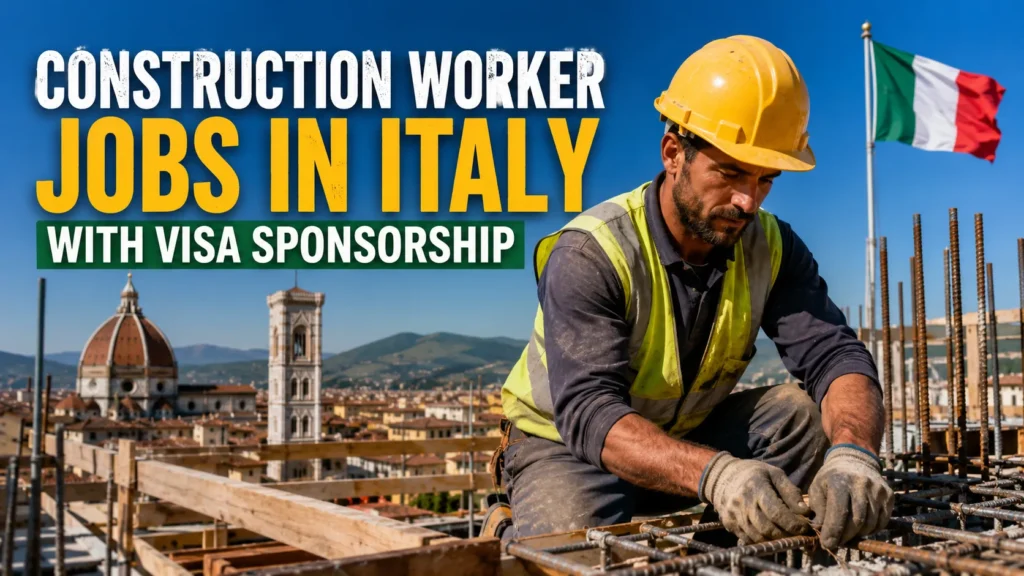
Italy has an active construction and infrastructure sector that creates employment opportunities for skilled and general workers. Construction companies, property developers, renovation businesses, and infrastructure contractors require workers for residential buildings, commercial properties, roads, bridges, and other projects. As a result, Construction Worker Jobs in Italy with Visa Sponsorship 2026 may provide opportunities for international applicants with experience in construction, building maintenance, general labor, or skilled trades.
Construction workers perform a wide range of tasks depending on their skills and the type of project. General laborers may assist skilled tradespeople, move materials, prepare work areas, and maintain construction sites. Skilled workers may work as bricklayers, carpenters, electricians, plumbers, painters, or other specialists.
Job Overview
Construction workers help build, repair, renovate, and maintain residential, commercial, and infrastructure projects.
Job Title: Construction Worker / General Laborer / Building Worker / Construction Helper / Skilled Tradesperson
Country: Italy
Job Type: Full-Time / Permanent / Temporary, depending on the employer and project
Experience Required: Previous construction experience may be beneficial, while some entry-level positions may provide on-the-job training
Education Required: Varies by position; specialized trades may require vocational qualifications or professional certifications
Visa Sponsorship: May be available for eligible international workers through selected employers and applicable Italian work authorization pathways
Work Locations: Rome, Milan, Naples, Turin, Bologna, Florence, and other cities and regions across Italy
Salary: Varies depending on experience, qualifications, location, trade, employer, and employment contract
Some employers may offer overtime payments, paid leave, work clothing, safety equipment, training, accommodation assistance, or transportation support.
Why Construction Workers Are Needed in Italy
Italy has ongoing construction, renovation, and infrastructure projects that require workers with different levels of experience. The renovation of residential and commercial buildings can create demand for construction labor, while infrastructure development may require workers in specialized trades.
Several factors may contribute to construction employment opportunities:
- Residential construction
- Commercial building projects
- Building renovation
- Infrastructure development
- Road and transportation projects
- Property maintenance
- Restoration of older buildings
- Construction of industrial facilities
Also Check: Construction Jobs in Italy with Visa Sponsorship 2026
Types of Construction Jobs Available
International applicants may find different positions depending on their experience and qualifications.
General Construction Worker
General construction workers perform basic tasks such as moving materials, preparing work areas, assisting tradespeople, and maintaining clean construction sites.
Construction Helper
Construction helpers support skilled workers and supervisors with daily tasks and may receive practical training while working.
Bricklayer
Bricklayers build and repair walls and other structures using bricks, blocks, and related materials.
Carpenter
Carpenters work with wood and other materials to construct frameworks, doors, flooring, and other building components.
Painter
Construction painters prepare and paint walls, ceilings, doors, and other surfaces in new or renovated buildings.
Job Responsibilities
Construction duties vary according to the position and project. Common responsibilities may include:
- Preparing construction sites
- Loading and unloading materials
- Moving tools and equipment
- Assisting skilled tradespeople
- Mixing and handling construction materials
- Building and repairing structures
- Operating basic tools and equipment
- Cleaning and organizing work areas
- Following instructions from supervisors
- Following health and safety procedures
- Wearing required protective equipment
- Working with construction teams
Skilled workers may also perform specialized tasks related to their trade and qualifications.
Salary and Employee Benefits
Construction salaries in Italy vary depending on the worker’s experience, trade, qualifications, location, employer, and employment contract. Skilled tradespeople may earn more than general laborers due to their specialized expertise.
Potential benefits may include:
- Competitive salary
- Paid annual leave
- Overtime payments where applicable
- Work clothing and protective equipment
- Training and professional development
- Accommodation assistance in selected positions
- Transportation support
- Opportunities for long-term employment
The exact salary and benefits should always be confirmed through the official job advertisement and employment contract.
Visa Sponsorship Process
Foreign workers who want to work in Italy generally need appropriate legal authorization unless they already have the right to work there. Non-EU applicants may require an employer-supported work authorization process and an appropriate work visa or residence permit.
The process may generally involve:
Step 1: Search for Construction Jobs
Look for construction vacancies through legitimate Italian employers, construction companies, recruitment agencies, and reputable job platforms.
Step 2: Check Eligibility
Review the job requirements and determine whether your experience, qualifications, and skills match the position.
Step 3: Prepare Your Application
Create an updated CV highlighting your construction experience, trade skills, qualifications, and previous projects.
Step 4: Attend an Interview
Shortlisted candidates may be invited to an online, telephone, or face-to-face interview. Skilled workers may also be asked about their technical experience.
Step 5: Receive a Job Offer
Successful candidates may receive an employment offer explaining salary, working hours, responsibilities, and other employment conditions.
Step 6: Complete Work Authorization Procedures
Eligible candidates must complete the required work authorization and visa procedures before beginning employment in Italy.
Step 7: Travel to Italy
After receiving the necessary authorization, the successful applicant can travel to Italy and begin work according to the conditions of their employment contract and immigration permission.
Applicants should check the latest Italian immigration rules because work permit procedures and requirements can change.
Requirements for Construction Jobs
Requirements vary between employers, but candidates may generally need:
- Appropriate legal authorization to work in Italy
- Previous construction experience for experienced positions
- Physical fitness
- Ability to work outdoors and indoors
- Ability to follow safety instructions
- Teamwork skills
- Reliability and punctuality
- Basic communication skills
- Knowledge of construction tools and equipment
Skilled positions may require vocational training, professional certifications, or documented trade experience.
Skills That Improve Your Chances
Useful skills for construction jobs may include:
- General construction
- Bricklaying
- Carpentry
- Painting
- Concrete work
- Plumbing
- Electrical work
- Use of construction tools
- Workplace safety
- Teamwork
- Problem-solving
- Physical stamina
Knowledge of Italian can be beneficial when communicating with supervisors and coworkers, while English may be useful on international construction projects.
Working Conditions
Construction workers may work indoors or outdoors depending on the project. The job can be physically demanding and may involve lifting, bending, standing, climbing, and working with tools and equipment.
Employees may work different schedules depending on project deadlines and weather conditions. Construction workers must follow strict health and safety procedures and use appropriate protective equipment.
How to Apply
If you are interested in Construction Worker Jobs in Italy with Visa Sponsorship 2026, follow these steps:
- Prepare an updated CV highlighting your construction experience and skills.
- Collect relevant qualifications and trade certificates.
- Search for current vacancies through legitimate Italian employers and recruitment agencies.
- Check whether the employer accepts applications from international workers.
- Confirm whether the position may qualify for the appropriate Italian work authorization.
- Submit your application online.
- Attend interviews or practical assessments if shortlisted.
- Carefully review the employment offer.
- Complete the required work permit and visa procedures if eligible.
- Travel to Italy after receiving the necessary authorization.
- Click Apply Now to get started
Final Thoughts
Construction Worker Jobs in Italy with Visa Sponsorship 2026 may provide opportunities for international workers with experience in general construction, building renovation, infrastructure, and skilled trades. Italy’s construction sector requires workers for residential and commercial projects, property renovation, infrastructure development, and maintenance. However, visa sponsorship is not guaranteed for every construction position, and international applicants must meet the relevant Italian immigration and employment requirements. Candidates should carefully check each vacancy, verify the employer, confirm work authorization eligibility, and apply through legitimate recruitment channels. With practical construction skills, relevant experience, and the correct legal authorization, international workers may gain valuable experience and develop a long-term career in Italy’s construction industry.