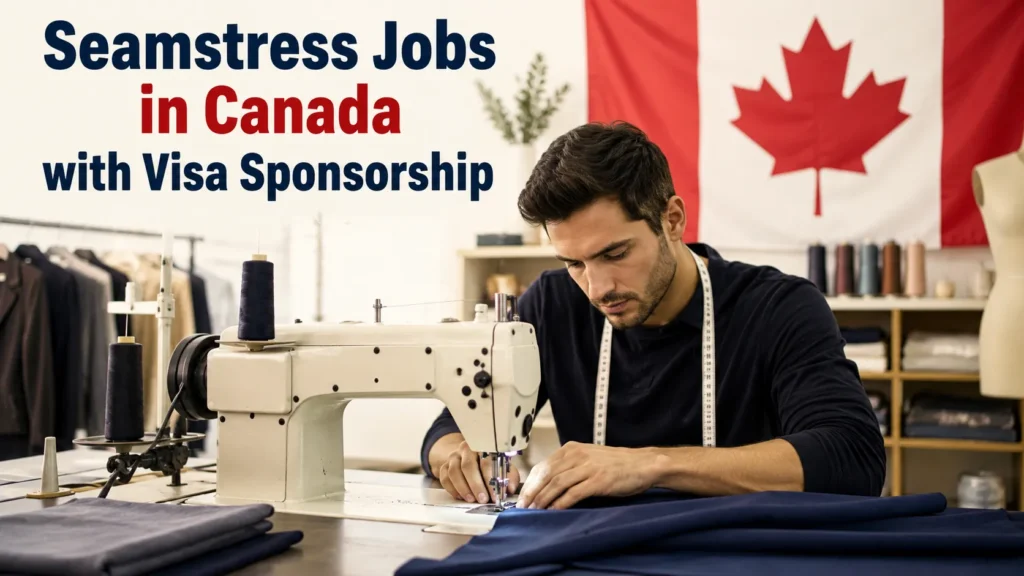
Canada has a diverse apparel, textile, fashion, manufacturing, and alteration industry that creates employment opportunities for experienced seamstresses and sewing professionals. Clothing manufacturers, tailoring businesses, fashion companies, upholstery workshops, costume departments, dry cleaners, and alteration shops require skilled workers who can cut, sew, repair, and modify different types of fabrics and garments. As a result, Seamstress Jobs in Canada with Visa Sponsorship may provide opportunities for international workers with relevant sewing experience and technical skills.
Seamstresses perform a variety of duties depending on their workplace and specialization. They may sew garments, alter clothing, repair damaged items, operate industrial sewing machines, follow patterns, and inspect finished products. With experience and additional training, workers may progress into positions such as senior seamstress, tailor, garment technician, sewing supervisor, or production manager.
Job Overview
Seamstresses are responsible for creating, repairing, and altering garments and other fabric-based products according to customer or production requirements.
Job Title: Seamstress / Sewing Machine Operator / Garment Worker / Tailor / Alteration Specialist / Garment Technician
Country: Canada
Job Type: Full-Time / Part-Time / Contract
Experience Required: Previous experience in sewing, garment production, tailoring, clothing alterations, or textile manufacturing may be preferred
Education Required: Formal qualifications may not always be required for entry-level positions, although sewing training or technical education can be beneficial
Visa Sponsorship: Available with selected eligible employers and positions, subject to Canadian employment and immigration requirements
Work Locations: Toronto, Vancouver, Montreal, Calgary, Edmonton, Ottawa, Winnipeg, Quebec City, and other locations across Canada
Salary: Approximately CAD $30,000–$50,000 per year, depending on experience, qualifications, employer, location, working hours, and job responsibilities.
Also Check: Insulation Worker Jobs in Canada with Visa Sponsorship 2026
Why Seamstresses Are Needed in Canada
Canada has a variety of businesses involved in clothing production, textile manufacturing, tailoring, fashion, and garment alterations. Although the size of the apparel industry varies by region, skilled sewing professionals may find opportunities with companies that manufacture clothing and textile products or provide specialized alteration services.
Seamstresses are also needed in industries that require specialized sewing skills. These may include upholstery, furniture manufacturing, automotive interiors, theatrical costumes, uniforms, and specialty textile products.
Several factors may contribute to employment opportunities:
- Demand for clothing alterations
- Growth of specialty garment production
- Fashion and textile businesses
- Uniform manufacturing
- Upholstery and textile production
- Custom tailoring services
- Demand for experienced sewing machine operators
- Production of specialized textile products
These factors may create opportunities for suitable applicants. However, international workers must meet the relevant Canadian employment and immigration requirements before beginning work.
Types of Seamstress Jobs Available
Canadian employers may offer different positions depending on the worker’s skills and experience.
Garment Seamstress
Garment seamstresses sew clothing and textile products using industrial or domestic sewing machines. They may work with patterns and follow specific production instructions.
Alteration Specialist
Alteration specialists modify clothing to achieve the correct size and fit. Their work may include shortening, resizing, repairing, or adjusting garments.
Sewing Machine Operator
Sewing machine operators use industrial equipment to stitch fabric and assemble garments or textile products according to production specifications.
Tailor
Tailors create, repair, and alter clothing. They may work with individual customers or in professional tailoring and clothing businesses.
Costume Seamstress
Costume seamstresses may create and modify costumes for theaters, film productions, television programs, entertainment companies, and special events.
Job Responsibilities
Daily duties vary depending on the employer and position, but common responsibilities may include:
- Operating sewing machines
- Cutting and preparing fabrics
- Following sewing patterns and instructions
- Stitching garment components
- Repairing damaged clothing
- Altering garments for proper fit
- Measuring customers or garments
- Checking finished products for quality
- Replacing zippers, buttons, and other components
- Performing hemming and adjustments
- Maintaining sewing machines and tools
- Keeping the work area clean and organized
- Meeting production deadlines
- Following workplace health and safety procedures
Some experienced seamstresses may also help create patterns, select suitable fabrics, train junior workers, or inspect completed garments.
Salary and Employee Benefits
Seamstress salaries in Canada vary depending on experience, location, specialization, employer, and job responsibilities.
Common benefits may include:
- Annual salary of approximately CAD $30,000 to $50,000
- Employer support for eligible work authorization procedures
- Paid vacation
- Overtime pay
- Health and dental benefits in some positions
- Employee discounts
- Work uniforms
- On-the-job training
- Career development opportunities
Workers with advanced tailoring skills or experience in specialized sewing techniques may have access to higher-paying opportunities.
The exact salary, benefits, working hours, and visa sponsorship arrangements should always be confirmed directly with the employer before accepting a position.
Visa Sponsorship Process
International workers generally need appropriate authorization to work in Canada before beginning employment. The process depends on the applicant’s nationality, qualifications, job offer, employer, and immigration program available to them.
Step 1: Search for Seamstress Jobs
Search for vacancies through clothing manufacturers, tailoring businesses, fashion companies, alteration shops, textile manufacturers, and reputable recruitment agencies.
Step 2: Prepare Your CV and Portfolio
Prepare an updated CV highlighting your sewing experience, technical skills, garment production knowledge, and previous employment.
A portfolio containing photographs of completed garments, alterations, embroidery, or other sewing projects can also strengthen an application.
Step 3: Attend an Interview
Shortlisted candidates may be invited for an online or in-person interview. Employers may ask about sewing techniques, machine operation, garment construction, and previous work experience.
Step 4: Complete a Practical Test
Some employers may ask applicants to complete a sewing or alteration test to assess their technical skills, accuracy, speed, and ability to follow patterns.
Step 5: Receive a Job Offer
Successful candidates may receive an employment offer explaining the job title, salary, working hours, responsibilities, and other employment conditions.
Step 6: Employer Provides Support
Where applicable, an eligible employer may assist with the necessary employment and immigration procedures. Applicants should confirm whether the employer and specific position are eligible to hire international workers.
Step 7: Submit Required Documents
Applicants may generally need to provide:
- Valid passport
- Updated CV
- Job offer or employment contract
- Proof of sewing experience
- Employment references
- Educational or sewing certificates, if applicable
- Portfolio of previous work
- Police clearance documents, if required
- Medical documents, where applicable
- Other documents requested by Canadian authorities
Step 8: Complete the Immigration Process
The applicant completes the required work permit or immigration application and submits all necessary documentation.
Step 9: Travel to Canada
After receiving the necessary approval, the worker can travel to Canada and complete workplace orientation, safety training, and other onboarding requirements.
Applicants should always check the latest Canadian immigration requirements before applying because visa programs and eligibility rules can change.
Requirements for Seamstress Jobs
Employers may have different requirements depending on the position. Candidates may be expected to have:
- Previous sewing experience
- Knowledge of garment construction
- Ability to operate sewing machines
- Good hand-eye coordination
- Strong attention to detail
- Ability to follow patterns and instructions
- Good time management
- Physical stamina
- Ability to work independently
- Teamwork and communication skills
Some positions may require experience with specific fabrics, industrial sewing machines, embroidery, alterations, or specialized garment production.
Skills That Improve Your Chances
Applicants with a broad range of sewing and tailoring skills may have better employment prospects. Useful skills include:
- Industrial sewing
- Garment construction
- Clothing alterations
- Pattern reading
- Fabric cutting
- Machine operation
- Hand sewing
- Zipper and button replacement
- Embroidery
- Quality control
- Garment finishing
- Basic pattern making
Experience with different types of fabrics and sewing machines can strengthen an application. A strong portfolio can also help demonstrate practical abilities to potential employers.
Working Conditions
Seamstresses may work in clothing factories, fashion studios, tailoring shops, alteration businesses, textile companies, costume departments, and manufacturing facilities.
Most work is performed indoors, although working conditions vary by employer. Seamstresses may sit or stand for long periods and perform repetitive hand and machine movements.
Employees may work standard daytime hours, while manufacturing facilities may operate evening or rotating shifts. Meeting production deadlines may sometimes require additional working hours.
Workers must follow workplace safety procedures and use sewing machines and other equipment correctly.
Benefits of Working in Canada
Canada offers several potential benefits for eligible international sewing professionals.
These include:
- Opportunities in garment production
- Employment in tailoring and alteration businesses
- Experience in the Canadian textile industry
- Opportunities to develop technical skills
- On-the-job training
- Potential overtime opportunities
- International work experience
- Career progression opportunities
With experience and additional training, seamstresses may progress into positions such as senior seamstress, tailor, garment technician, pattern maker, quality control specialist, sewing supervisor, or production manager.
How to Apply
If you are interested in Seamstress Jobs in Canada with Visa Sponsorship, follow these steps:
- Prepare a professional CV highlighting your sewing, tailoring, garment production, and alteration experience.
- Create a portfolio showcasing your best sewing and clothing projects.
- Gather your passport, employment references, certificates, and other relevant documents.
- Search for vacancies through reputable clothing manufacturers, fashion companies, tailoring businesses, and recruitment agencies.
- Check whether the employer is legally able and willing to hire eligible international workers.
- Submit your application with all required documents.
- Attend an online or in-person interview if shortlisted.
- Complete a practical sewing test if requested.
- Carefully review the employment contract before accepting the position.
- Confirm the employer’s work authorization and immigration support arrangements.
- Make sure salary, working hours, benefits, and other employment conditions are clearly explained.
- Complete the required Canadian employment and immigration procedures.
- Travel to Canada after receiving the necessary approval and begin your new job.
- Click Apply Now to get started
Final Thoughts
Seamstress Jobs in Canada with Visa Sponsorship may offer opportunities for skilled international workers with experience in sewing, tailoring, garment production, and clothing alterations. Seamstresses play an important role in creating, repairing, and modifying garments and textile products across Canada’s fashion, manufacturing, tailoring, and specialty industries. Competitive wages, overtime opportunities, paid vacation, employee benefits, training, and potential career progression can make these positions attractive to eligible overseas workers. Whether you are an experienced seamstress, tailor, sewing machine operator, or garment worker, working in Canada can provide valuable international experience and opportunities to build a long-term career in the textile and apparel industry.