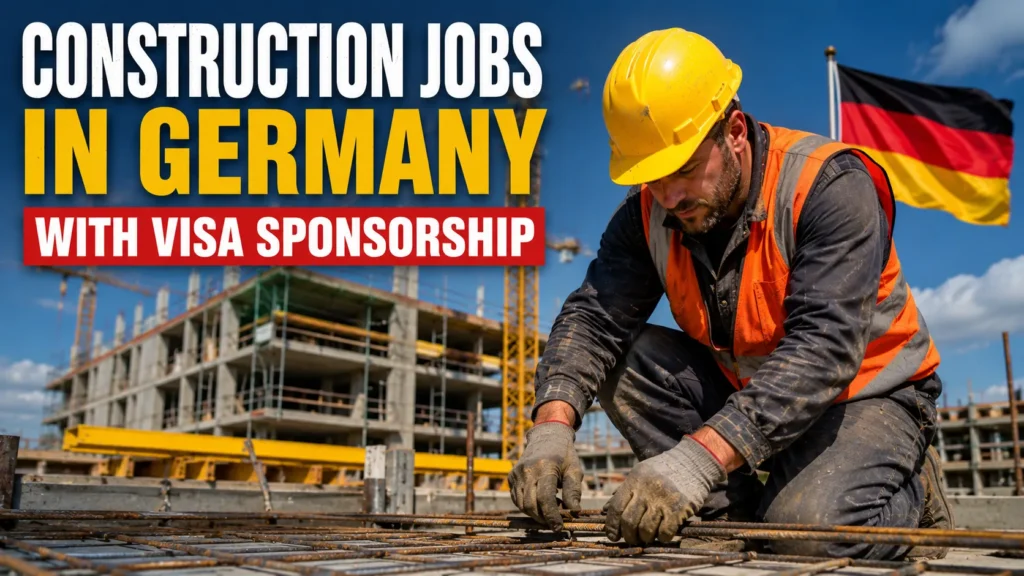
Germany’s construction industry continues to experience steady growth as the country invests heavily in residential housing, commercial developments, transportation infrastructure, renewable energy projects, and industrial facilities. With an ageing workforce and a shortage of skilled and general construction workers, many German employers are actively recruiting qualified international candidates and offering work visa sponsorship. As a result, Construction Jobs in Germany with Visa Sponsorship 2026 provide an excellent opportunity for foreign workers seeking stable employment, competitive salaries, and long-term career growth.
Construction workers play a vital role in building homes, offices, roads, bridges, factories, and public infrastructure. Depending on their skills and experience, workers may assist with general labour, operate heavy machinery, install building materials, or specialise in trades such as carpentry, masonry, or concrete work. Many employers also provide professional training, accommodation assistance, health insurance, and opportunities to advance into supervisory or project management roles.
Job Overview
Construction workers support building and infrastructure projects by performing a variety of skilled and general construction tasks.
Job Title: Construction Worker / Construction Labourer / General Labourer / Building Worker / Skilled Construction Tradesperson
Country: Germany
Job Type: Full-Time
Experience Required: Previous construction experience is preferred, although some employers provide training for entry-level workers.
Education Required: High school diploma is generally preferred but is not always required.
Visa Sponsorship: Available with selected employers
Work Locations: Berlin, Munich, Hamburg, Frankfurt, Stuttgart, Cologne, Düsseldorf, Leipzig, Bremen, Hanover, and other cities across Germany
Salary: Approximately €2,800–€4,500 per month, depending on experience, qualifications, employer, location, and overtime.
Many employers also provide paid holidays, health insurance, pension contributions, overtime pay, safety equipment, accommodation assistance, and professional training.
Why Construction Jobs Are in Demand in Germany
Germany continues to invest in housing, public infrastructure, and sustainable development projects. At the same time, the country faces a shortage of skilled construction professionals, creating strong demand for both experienced and entry-level workers.
Several factors contribute to the growing demand:
- Expansion of residential housing projects
- Government investment in infrastructure
- Growth in commercial and industrial construction
- Labour shortages in skilled trades
- Renewable energy and green building projects
- Urban development across major cities
- Retirement of experienced construction workers
- Increased demand for modern infrastructure
Also Check: Housekeeping Jobs in Germany with Visa Sponsorship 2026
Types of Construction Jobs Available
German employers recruit construction workers for a wide variety of projects.
General Construction Labourer
General labourers assist with site preparation, material handling, cleaning, and supporting skilled tradespeople on construction sites.
Concrete Worker
Concrete workers prepare, pour, level, and finish concrete for foundations, buildings, bridges, and roads.
Carpenter
Carpenters build and install wooden structures, roofing systems, flooring, and interior fittings for residential and commercial projects.
Mason
Masons construct walls, foundations, and other structures using bricks, blocks, stone, and concrete materials.
Heavy Equipment Operator
Heavy equipment operators use excavators, bulldozers, cranes, loaders, and other machinery to support construction activities.
Construction Site Helper
Site helpers assist with loading materials, preparing equipment, maintaining site safety, and completing general construction tasks.
Job Responsibilities
Daily responsibilities vary depending on the employer and project, but common duties include:
- Preparing construction sites before work begins
- Loading and unloading building materials
- Assisting skilled tradespeople
- Operating construction tools and equipment
- Mixing and pouring concrete
- Installing construction materials
- Following building plans and site instructions
- Maintaining a clean and safe work environment
- Following workplace health and safety regulations
- Reporting equipment faults or safety concerns
- Moving materials around the site
- Completing assigned tasks within project deadlines
Employers value workers who are dependable, physically fit, safety-conscious, and able to work effectively as part of a team.
Salary and Employee Benefits
Construction jobs in Germany offer competitive salaries together with an attractive range of employment benefits.
Common benefits include:
- Monthly salary between €2,800 and €4,500
- Visa sponsorship for eligible international workers
- Paid annual leave
- Health insurance
- Pension contributions
- Overtime pay
- Safety equipment provided
- Professional training programs
- Accommodation assistance
- Career advancement opportunities
Some employers also provide relocation assistance, attendance bonuses, meal allowances, travel allowances, and long-term employment contracts.
Visa Sponsorship Process
International applicants generally require a valid German work visa before beginning employment.
Step 1: Apply for Construction Jobs
Search for vacancies through German job portals, construction companies, recruitment agencies, and employers offering visa sponsorship.
Step 2: Receive a Job Offer
Successful applicants receive a formal employment contract outlining salary, working hours, responsibilities, and employee benefits.
Step 3: Employer Provides Visa Support
The employer provides the necessary documentation to support the employee’s work visa application. Depending on the position, the employer may also assist with obtaining the required work authorisation.
Step 4: Submit Required Documents
Applicants are generally required to provide:
- Valid passport
- Updated CV or resume
- Educational certificates
- Trade certificates (if applicable)
- Employment references
- Job offer letter
- Police clearance certificate
- Medical documents (if required)
- Completed work visa application forms
Step 5: Visa Approval
Once the work visa application is approved, applicants receive permission to work in Germany.
Step 6: Travel to Germany
Employees relocate to Germany, complete workplace orientation, and receive training on safety procedures, equipment, and company policies.
Step 7: Begin Employment
Workers begin their construction duties according to the terms outlined in their employment contract.
Requirements for Construction Jobs
Most employers seek applicants with the following qualifications:
- Valid passport
- Good physical fitness
- High school education or equivalent
- Basic English or German communication skills
- Ability to work outdoors in different weather conditions
- Willingness to follow safety procedures
- Ability to lift heavy materials
- Reliable and responsible attitude
- Teamwork skills
- Construction experience is an advantage
Trade qualifications and previous construction experience can significantly improve employment opportunities, although many entry-level positions provide training.
Skills That Improve Your Chances
Applicants with the following skills often enjoy stronger employment prospects:
- Construction site experience
- Carpentry
- Masonry
- Concrete work
- Heavy equipment operation
- Blueprint reading
- Safety awareness
- Time management
- Communication skills
- Teamwork
- Physical stamina
- Problem-solving
Holding certifications in occupational safety, machinery operation, scaffolding, or first aid can further strengthen your application.
Working Conditions
Construction workers are employed on residential, commercial, and industrial projects where safety, teamwork, and productivity are essential.
Typical workplaces include:
- Residential housing developments
- Commercial office buildings
- Industrial facilities
- Roads and highways
- Bridges
- Schools and hospitals
- Warehouses
- Infrastructure projects
Most construction workers are employed for 38 to 40 hours per week, with overtime often available during busy construction periods. Depending on project requirements, evening or weekend work may occasionally be necessary.
Advantages of Working in Germany
Germany offers many benefits for international construction workers.
These include:
- Visa sponsorship opportunities
- Competitive monthly salaries
- Paid annual leave
- Health insurance
- Pension contributions
- Overtime opportunities
- Safe and modern working environments
- Professional training
- High demand for construction workers
- Excellent long-term career prospects
Germany’s expanding construction industry continues to provide rewarding career opportunities for skilled and entry-level workers from around the world.
How to Apply
If you are interested in Construction Jobs in Germany with Visa Sponsorship 2026, follow these steps:
- Prepare a professional CV highlighting your construction experience, technical skills, trade certifications, and safety training.
- Gather copies of your passport, educational certificates, employment references, trade qualifications, and other required documents.
- Search for construction vacancies through reputable German job portals, construction companies, recruitment agencies, and employers offering visa sponsorship.
- Submit your application together with all required supporting documents.
- Attend interviews, practical assessments, or trade tests if shortlisted.
- Carefully review the employment contract before accepting the position.
- Complete the German work visa application process.
- Travel to Germany after receiving work authorisation.
- Begin your new role while following your employer’s safety procedures, construction standards, and workplace policies.
- Click Apply Now to get started
Final Thoughts
Construction Jobs in Germany with Visa Sponsorship 2026 provide an excellent opportunity for international workers seeking a rewarding career in one of Europe’s strongest construction industries. With continued investment in housing, infrastructure, renewable energy, and commercial development, German employers are actively recruiting overseas workers to address labour shortages across the country. Competitive salaries, visa sponsorship, paid holidays, health insurance, pension contributions, accommodation assistance, professional training, and career advancement opportunities make these positions highly attractive. Whether you have experience in general construction, carpentry, masonry, concrete work, or heavy equipment operation, working in Germany’s construction sector can provide valuable international experience, stable employment, and excellent long-term career growth.