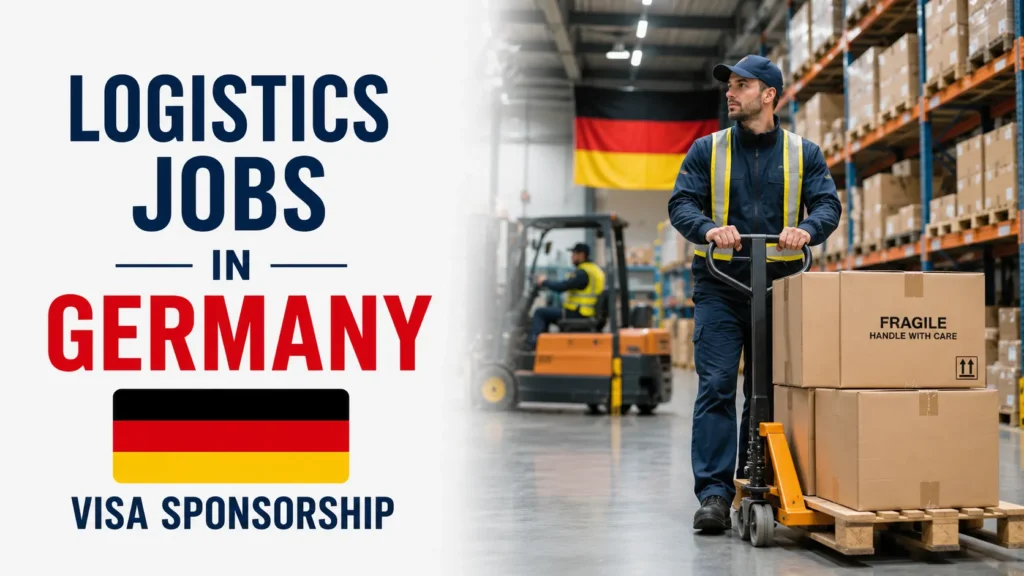
In 2026, logistics jobs in Germany with visa sponsorship are becoming a strong opportunity for international workers who want stable employment in Europe. Germany is one of the world’s largest logistics and transportation hubs, supporting global trade through advanced supply chain systems, modern warehouses, and highly developed transport networks.
Due to continuous growth in e-commerce, manufacturing exports, and distribution services, Germany is facing a shortage of skilled and semi-skilled logistics workers. As a result, many companies are hiring foreign workers and offering visa sponsorship to fill essential roles in warehouses, transport operations, and supply chain management.
Job Overview
Logistics jobs in Germany cover a wide range of roles involved in storage, transportation, inventory management, and distribution of goods.
- Job Title: Logistics Assistant / Warehouse Worker / Forklift Operator / Delivery Handler / Supply Chain Assistant / Order Picker / Shipping Coordinator
- Country: Germany
- Job Type: Full-time / Contract-based / Shift-based
- Experience Required: 0–3 years (entry-level roles available)
- Education Requirement: Basic education (technical roles may require training)
- Salary Range: €2,400 – €4,500 per month depending on role and experience
- Work Environment: Warehouses, distribution centers, factories, transport hubs
These roles are suitable for both beginners and experienced workers in the logistics field.
Why Logistics Jobs Are in Demand in Germany
Logistics jobs are in high demand across Germany due to several important factors:
- Rapid growth of e-commerce and online shopping
- Expansion of global export and import operations
- Shortage of skilled warehouse and transport workers
- Growth of manufacturing industries
- Increasing demand for fast delivery services
- Digital transformation of supply chain systems
- High turnover in manual labour roles
Germany’s strong industrial economy depends heavily on logistics networks to keep goods moving efficiently across Europe and beyond.
Also Check: Coffee Shop Assistant Jobs in Germany 2026: Apply Now
Job Responsibilities
Logistics workers play a key role in ensuring smooth supply chain operations. Their responsibilities depend on the job role but generally include:
- Receiving and storing incoming goods
- Packing and labeling products for shipment
- Sorting and organizing inventory
- Loading and unloading trucks and containers
- Operating warehouse equipment and forklifts
- Tracking shipments using digital systems
- Preparing delivery documentation
- Ensuring timely distribution of goods
- Maintaining warehouse cleanliness and safety
- Supporting logistics coordination teams
These tasks require physical effort, attention to detail, and teamwork.
Salary Expectations
Salaries in logistics jobs in Germany vary depending on experience, role, and location.
- Entry-level logistics worker: €2,400 – €2,800 per month
- Skilled warehouse or forklift operator: €2,800 – €3,500 per month
- Experienced logistics coordinator or supervisor: €3,500 – €4,500+ per month
Additional benefits may include:
- Visa sponsorship support (for selected roles)
- Paid overtime
- Health insurance coverage
- Paid annual leave
- Training programs
- Transport allowances
- Shift bonuses
Large logistics companies often provide better salary packages and long-term contracts.
Requirements for Logistics Jobs in Germany
To qualify for logistics jobs with visa sponsorship, applicants typically need:
- Basic physical fitness
- Ability to work in fast-paced environments
- Basic English or German communication skills
- Willingness to work in shifts (day/night/weekends)
- Teamwork and reliability
- Valid passport and travel documents
- Ability to follow workplace safety rules
Some technical roles may require forklift certification or previous warehouse experience.
Types of Logistics Jobs in Germany
There are different job roles within the logistics sector depending on skills and experience.
Warehouse Worker
Handles sorting, packing, and storing goods in warehouses.
Order Picker
Selects items from shelves based on customer orders.
Forklift Operator
Operates machinery to move heavy goods safely.
Logistics Assistant
Supports supply chain coordination and documentation.
Shipping Clerk
Manages shipping records and prepares delivery documents.
Supply Chain Coordinator
Oversees movement of goods from suppliers to customers.
Each role offers different levels of responsibility and career progression.
Work Conditions
Logistics jobs in Germany usually involve:
- Shift-based working hours
- Indoor warehouse environments
- Standing and physical movement for long hours
- Fast-paced production targets
- Team-based operations
- Strict safety regulations
- Seasonal workload increases
Employers usually provide safety gear, uniforms, and training.
Benefits of Working in Germany’s Logistics Sector
Working in logistics jobs in Germany offers several advantages:
- Legal employment through visa sponsorship in selected roles
- Strong demand for workers
- Competitive salaries compared to many countries
- High-quality workplace safety standards
- Paid holidays and social benefits
- Career growth opportunities
- Exposure to international logistics systems
- Stable long-term employment options
Germany is considered one of the strongest economies in Europe, making it a reliable destination for foreign workers.
How to Apply?
The application process for logistics jobs in Germany typically includes:
- Searching job openings on international job portals
- Applying through recruitment agencies
- Preparing a simple but professional CV
- Attending interviews (online or in-person)
- Receiving a job offer from an employer
- Employer initiating visa sponsorship (if applicable)
- Submitting required documents for visa processing
- Relocating after approval
- Click Apply Now to get started
Applying to multiple companies increases the chances of selection.
Challenges of Logistics Jobs
While logistics jobs offer good opportunities, they also come with challenges:
- Physically demanding work
- Long standing hours
- Shift-based schedules including nights
- Fast production and delivery deadlines
- Repetitive tasks
- Busy peak seasons such as holidays
Despite these challenges, many workers choose logistics jobs for stable income and international experience.
Career Growth Opportunities
Logistics jobs can lead to higher positions such as:
- Senior Warehouse Operator
- Logistics Supervisor
- Supply Chain Coordinator
- Inventory Manager
- Operations Manager
With experience and training, workers can move into higher-paying and more skilled roles within the logistics industry.
Skills That Improve Job Opportunities
To improve chances of getting hired, applicants should develop:
- Basic communication skills (English or German)
- Time management
- Physical stamina
- Attention to detail
- Teamwork abilities
- Basic logistics or warehouse knowledge
- Forklift certification (for advanced roles)
These skills help candidates perform better and grow faster in the industry.
Final Thoughts
Logistics jobs in Germany with visa sponsorship in 2026 offer excellent opportunities for international workers seeking stable employment in Europe. With strong demand in warehouses, transport hubs, and supply chain companies, Germany continues to hire foreign workers to support its growing logistics industry.
For those looking to work abroad, logistics jobs provide legal employment pathways, competitive salaries, and long-term career growth in one of Europe’s most advanced economies.