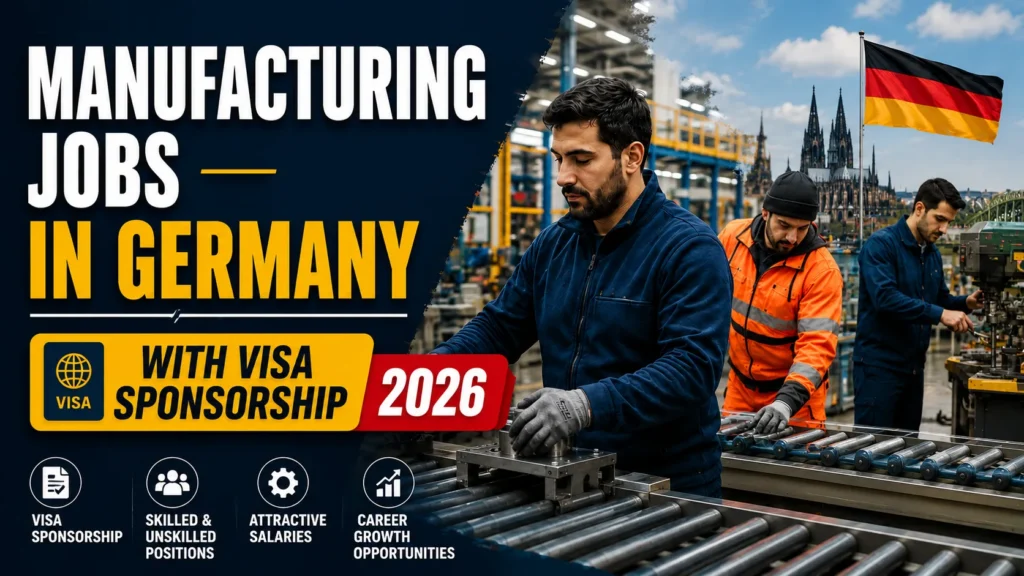
In 2026, manufacturing jobs in Germany with visa sponsorship are becoming an increasingly attractive employment opportunity for international workers seeking stable careers abroad. Germany is widely recognized as one of the world’s strongest industrial economies, with a globally respected manufacturing sector that plays a vital role in its economic success. From automotive production and machinery engineering to electronics and industrial equipment manufacturing, Germany offers excellent employment opportunities for skilled and semi-skilled foreign workers.
Germany’s manufacturing industry continues to face labor shortages due to an aging workforce, industrial expansion, and increasing production demands. To address these workforce gaps, many German employers are actively hiring international workers and offering visa sponsorship opportunities to qualified applicants. These jobs provide competitive salaries, legal employment, professional training, and long-term career development.
Job Overview
Manufacturing jobs in Germany involve supporting production processes across factories and industrial plants. Workers help ensure efficient operations, product quality, and production targets.
- Job Title: Factory Worker / Production Operator / Assembly Line Worker / Machine Operator / Packaging Worker / Manufacturing Assistant
- Country: Germany
- Job Type: Full-time / Part-time / Contract-based / Shift-based
- Experience Required: 0–3 years preferred
- Education Requirement: Basic education or technical training
- Salary Range: EUR 2,500 – EUR 4,500 per month (varies by employer and role)
- Work Environment: Automotive plants, electronics factories, machinery production units, food processing plants
These positions are ideal for individuals seeking stable industrial employment in Germany.
Why Manufacturing Jobs Are in Demand in Germany
Manufacturing jobs are in high demand across Germany due to several important factors:
- Germany’s strong industrial economy
- Expansion of automotive and engineering sectors
- Labor shortages caused by an aging population
- Increased global export demand
- Growth in automation and production facilities
- Need for skilled and semi-skilled factory workers
- Government support for foreign labor recruitment
Also Check: Airport Baggage Handler Jobs in Germany with Visa Sponsorship 2026
Job Responsibilities
Manufacturing workers support factory production and help maintain efficient industrial operations.
Common responsibilities include:
- Operating production machinery
- Monitoring manufacturing processes
- Assembling products and components
- Inspecting products for quality control
- Packing finished goods
- Loading and unloading materials
- Maintaining clean workstations
- Reporting equipment issues
- Following workplace safety procedures
- Assisting supervisors with operational tasks
These tasks require physical stamina, concentration, and teamwork skills.
Salary Expectations
Salaries for manufacturing jobs in Germany depend on experience, industry, and location.
- Entry-level manufacturing worker: EUR 2,500 – EUR 3,000 per month
- Experienced production operator: EUR 3,000 – EUR 3,800 per month
- Skilled machine operator: EUR 3,800 – EUR 4,500+ per month
Additional benefits may include:
- Visa sponsorship support
- Overtime pay
- Paid annual leave
- Health insurance
- Accommodation assistance
- Transportation allowance
- Shift bonuses
- Paid technical training
Automotive and engineering sectors often provide the highest salary packages.
Requirements for Manufacturing Jobs in Germany
To qualify for manufacturing jobs in Germany with visa sponsorship, applicants generally need:
- Basic physical fitness
- Ability to work long shifts
- Basic English or German communication skills
- Strong work ethic
- Reliability and punctuality
- Teamwork abilities
- Willingness to learn industrial processes
- Valid passport and legal documentation
Previous factory or production experience is helpful but not always mandatory.
Types of Manufacturing Jobs in Germany
Different manufacturing roles are available depending on the employer and industry.
Assembly Line Worker
Handles product assembly tasks in automotive and electronics production.
Machine Operator
Operates and monitors industrial machinery.
Packaging Worker
Packs finished products for storage and shipment.
Production Assistant
Supports daily factory operations and workflow.
Quality Control Assistant
Inspects products to ensure quality standards.
Warehouse Manufacturing Support Worker
Manages inventory and movement of production materials.
Each role offers different responsibilities and growth opportunities.
Work Conditions
Manufacturing jobs in Germany usually involve:
- 8–12 hour shifts
- Day and night shift rotations
- Weekend work depending on production schedules
- Fast-paced factory environments
- Standing for extended periods
- Noise exposure in some facilities
- Strict safety regulations
Employers typically provide safety equipment, uniforms, and operational training.
Benefits of Working in Germany
Working in manufacturing jobs in Germany offers several advantages:
- Visa sponsorship opportunities
- Competitive salaries
- Legal employment protections
- Access to Germany’s healthcare system
- International industrial experience
- Career advancement opportunities
- Stable long-term employment
- High quality of life
Germany is considered one of the best countries for industrial workers seeking overseas employment.
How to Apply?
To apply for manufacturing jobs in Germany with visa sponsorship:
- Search for vacancies on international job portals
- Apply through licensed recruitment agencies
- Prepare a professional CV
- Highlight manufacturing or technical experience
- Attend online interviews
- Complete technical assessments if required
- Receive a formal job offer
- Employer initiates visa sponsorship
- Submit work visa application documents
- Relocate after visa approval
- Click Apply Now to get started
Applying early improves chances of securing available positions.
Challenges of Working in Manufacturing Jobs
While these jobs offer valuable opportunities, there are also challenges:
- Physically demanding tasks
- Shift-based work schedules
- Repetitive production activities
- Adapting to industrial discipline
- Language barriers for some workers
- Strict performance expectations
Despite these challenges, many workers find manufacturing careers financially rewarding.
Career Growth Opportunities
Manufacturing jobs can lead to higher-level positions such as:
- Senior Machine Operator
- Production Supervisor
- Quality Control Inspector
- Technical Maintenance Assistant
- Factory Team Leader
- Operations Coordinator
With experience and training, workers can build long-term industrial careers.
Skills That Improve Employment Opportunities
To improve chances of getting hired, applicants can develop:
- Basic German language skills
- Technical machine handling knowledge
- Time management
- Problem-solving abilities
- Safety compliance awareness
- Teamwork skills
- Attention to detail
Technical certifications can significantly improve employment prospects.
Final Thoughts
Manufacturing jobs in Germany with visa sponsorship in 2026 offer excellent opportunities for international workers seeking stable industrial employment abroad. With Germany’s strong manufacturing sector and growing demand for foreign labor, these roles provide legal employment, competitive salaries, and valuable international experience.
For individuals looking to work in one of the world’s leading industrial economies, manufacturing jobs in Germany provide a solid foundation for long-term career growth. With dedication, adaptability, and willingness to learn, foreign workers can build successful and rewarding careers in Germany’s thriving manufacturing industry.