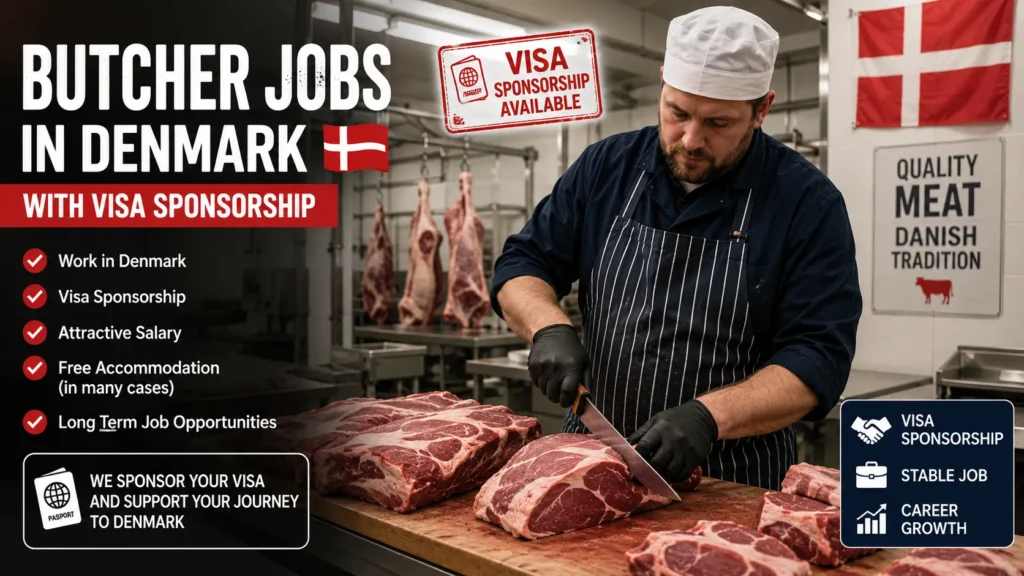
In 2026, butcher jobs in Denmark with visa sponsorship are emerging as a stable and attractive employment opportunity for international workers seeking careers in the food processing and meat production industry. Denmark is well known for its strong agricultural sector, high-quality meat exports, and strict food safety standards. Because of this, skilled and semi-skilled butchers are consistently in demand across slaughterhouses, meat processing plants, supermarkets, and food production facilities.
As Denmark’s food industry continues to expand to meet both domestic demand and international export requirements, many employers are facing shortages of trained meat processing workers. To fill these gaps, several companies are willing to hire foreign workers through legal work permits and employer-sponsored visa programs.
For international job seekers, butcher jobs in Denmark offer competitive wages, structured working hours, strong labor protections, and opportunities for long-term career development. Cities and industrial regions such as Copenhagen, Aarhus, Odense, Aalborg, and Esbjerg regularly offer employment opportunities in meat processing and butchery work.
Job Overview
Butcher jobs in Denmark involve cutting, preparing, processing, and packaging meat products while following strict hygiene and food safety regulations.
- Job Title: Butcher / Meat Cutter / Meat Processing Worker / Slaughterhouse Worker / Food Production Butcher
- Country: Denmark
- Job Type: Full-time / Contract-based
- Experience Required: 1–4 years (entry-level training available in some cases)
- Education Requirement: Vocational training or meat processing experience preferred
- Salary Range: DKK 280,000 – DKK 420,000 per year
- Work Environment: Slaughterhouses, meat processing plants, supermarkets, food production factories
Also Check: Farm Jobs in Denmark with Visa Sponsorship 2026
Why Butcher Jobs Are in Demand in Denmark
Butcher jobs are in high demand in Denmark for several important reasons:
- Strong meat export industry across Europe and global markets
- High demand for processed pork, beef, and poultry products
- Expansion of industrial food production facilities
- Shortage of local skilled butchers and meat cutters
- Strict hygiene and food safety compliance requirements
- Aging workforce in the meat processing sector
- Growth of supermarket meat departments and packaging units
Because of these factors, Denmark actively recruits both local and international workers for meat processing roles.
Job Responsibilities
Butchers in Denmark are responsible for handling meat preparation and processing while maintaining hygiene and safety standards.
Common responsibilities include:
- Cutting and trimming meat into specific portions
- Deboning beef, pork, and poultry
- Operating meat cutting machines and tools
- Inspecting meat quality for freshness and safety
- Packaging meat products for retail and export
- Maintaining cleanliness in work areas
- Following strict hygiene and food safety regulations
- Storing meat products at correct temperatures
- Assisting in slaughterhouse processing tasks (where applicable)
- Labeling and preparing products for distribution
These tasks require precision, strength, attention to detail, and strict adherence to safety standards.
Salary Expectations
Butcher salaries in Denmark are considered good compared to many other countries due to strong labor protections and unionized wage systems.
- Entry-level butcher: DKK 280,000 – DKK 320,000 per year
- Experienced butcher: DKK 320,000 – DKK 380,000 per year
- Senior butcher or meat specialist: DKK 380,000 – DKK 420,000+ per year
Additional benefits may include:
- Paid annual leave
- Pension contributions
- Health insurance coverage
- Overtime pay
- Shift allowances
- Paid sick leave
- Training opportunities
- Relocation support in some cases
Denmark provides one of the most structured and worker-friendly labor environments in Europe.
Requirements for Butcher Jobs in Denmark
To qualify for butcher jobs in Denmark with visa sponsorship, applicants generally need:
- Previous experience in meat cutting or food processing
- Knowledge of hygiene and food safety standards
- Ability to use knives and meat processing tools
- Physical fitness for standing and lifting tasks
- Basic English communication skills (Danish is a plus)
- Ability to work in cold environments
- Teamwork and discipline
- Clean background and legal documentation
Some employers may offer training for entry-level candidates, especially in large processing plants.
Types of Butcher Jobs in Denmark
Denmark offers several types of butcher roles depending on the workplace.
Slaughterhouse Butcher
Works in industrial facilities processing livestock into meat products.
Retail Butcher
Prepares and sells meat products in supermarkets and butcher shops.
Meat Processing Worker
Focuses on cutting, packaging, and preparing meat for distribution.
Industrial Meat Cutter
Operates machines for large-scale meat production.
Specialty Butcher
Prepares premium cuts for restaurants and gourmet markets.
Each role varies in responsibility but contributes to the same food supply chain.
Work Conditions
Butcher jobs in Denmark typically involve:
- 37–40 hour work weeks
- Early morning or shift-based schedules
- Cold working environments (refrigerated areas)
- Standing for long periods
- Physically demanding tasks
- Strict hygiene procedures
- Team-based production work
Employers provide safety clothing, gloves, and protective equipment.
Benefits of Working in Denmark
Working as a butcher in Denmark offers several advantages:
- Visa sponsorship opportunities
- High and stable wages
- Strong labor rights and union protection
- Safe working conditions
- Paid holidays and benefits
- Opportunities for long-term employment
- Potential pathway to residency
- Exposure to advanced food processing systems
Denmark is known for its high-quality working environment and worker welfare standards.
How to Apply?
To apply for butcher jobs in Denmark with visa sponsorship:
- Search for meat processing companies hiring foreign workers
- Apply through official company career websites
- Use licensed recruitment agencies
- Prepare a professional CV highlighting meat processing experience
- Provide references from previous employers
- Attend interviews or practical skill tests
- Receive a job offer from a Danish employer
- Employer initiates work visa sponsorship process
- Complete required documentation
- Relocate to Denmark for employment
- Click Apply Now to get started
Applicants must meet Danish work permit requirements before starting employment.
Challenges of Working as a Butcher in Denmark
Butcher jobs may include certain challenges such as:
- Working in cold environments
- Physically demanding tasks
- Repetitive cutting and processing work
- Strict hygiene compliance
- Fast-paced production lines
- Handling raw meat products
Despite these challenges, the profession offers strong job security and good income.
Career Growth Opportunities
Butcher jobs can lead to higher positions such as:
- Senior Butcher
- Meat Production Supervisor
- Quality Control Inspector
- Slaughterhouse Manager
- Food Safety Specialist
With experience and additional training, workers can build long-term careers in Denmark’s food production industry.
Skills That Improve Employment Opportunities
Workers can improve job opportunities by developing:
- Advanced knife handling skills
- Meat cutting techniques
- Food safety knowledge (HACCP standards)
- Time management skills
- Machine operation skills
- Physical endurance
- Team coordination abilities
Certifications in food hygiene or meat processing can significantly improve career prospects.
Final Thoughts
Butcher jobs in Denmark with visa sponsorship in 2026 offer excellent opportunities for international workers seeking stable employment, competitive wages, and long-term career development in one of Europe’s most regulated and high-quality food industries. With Denmark’s strong meat production and export sector continuing to grow, demand for skilled butchers remains steady.
For individuals seeking overseas food processing employment, butcher jobs provide a practical pathway into Denmark’s labor market. With discipline, skill, and commitment to food safety standards, workers can build successful careers while contributing to one of Europe’s most advanced and trusted meat production systems.