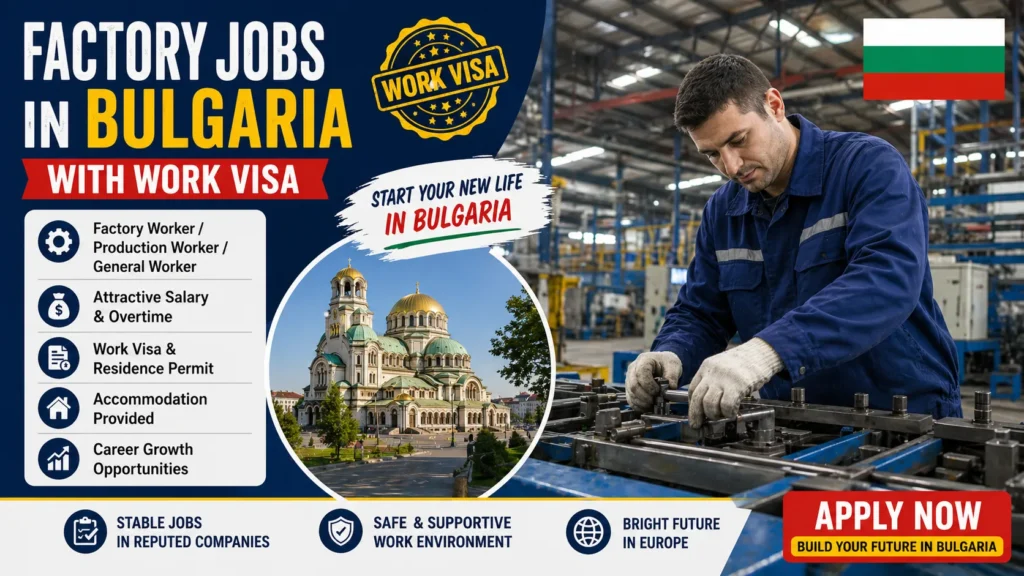
In 2026, factory jobs in Bulgaria are becoming a popular choice for international workers seeking stable employment in Europe. As Bulgaria continues to grow its manufacturing and industrial sectors, the demand for factory workers has increased significantly. Industries such as automotive, electronics, food processing, and textiles are expanding, leading to labor shortages that employers are increasingly filling with foreign workers through work visa programs.
For individuals looking for entry-level or semi-skilled work with consistent income and opportunities to live in Europe, factory jobs in Bulgaria offer a practical and accessible pathway.
Job Overview
Factory jobs in Bulgaria involve working in production units, assembly lines, and manufacturing facilities to support industrial operations.
- Job Title: Factory Worker / Production Worker / Assembly Line Operator / Machine Operator
- Country: Bulgaria
- Job Type: Full-time / Contract-based / Shift work
- Visa Sponsorship: Available for foreign workers (depending on employer)
- Experience Required: 0–2 years (entry-level roles available)
- Education Requirement: No formal education required (basic schooling preferred)
- Salary Range: €700 – €1,200 per month
- Work Environment: Manufacturing plants, warehouses, industrial facilities
Also Check: Helper Jobs in UAE with Visa Sponsorship 2026
Why Factory Jobs Are in Demand in Bulgaria
The demand for factory workers in Bulgaria is rising due to several key reasons:
- Growth in manufacturing and export industries
- Expansion of foreign investment in industrial sectors
- Labor shortages due to migration of local workers to Western Europe
- Increased production demand in automotive and electronics sectors
- Development of industrial zones and factories
- Need for cost-effective labor in production units
Cities such as Sofia, Plovdiv, Varna, and Burgas are major industrial hubs where factory job opportunities are widely available.
Job Responsibilities
Factory workers in Bulgaria perform a range of tasks depending on the industry and job role. Common responsibilities include:
- Operating machinery and production equipment
- Assembling products on production lines
- Packing and labeling finished goods
- Inspecting products for quality control
- Maintaining cleanliness and safety in the workplace
- Following production schedules and instructions
- Loading and unloading materials
- Reporting faults or issues to supervisors
- Adhering to safety regulations and company policies
- Assisting with general warehouse duties
These roles require attention to detail, discipline, and the ability to work in a team environment.
Work Visa Options
Foreign workers can apply for factory jobs in Bulgaria through legal work visa programs.
1. Bulgarian Work Visa (Type D)
This long-term visa allows non-EU citizens to live and work in Bulgaria with employer sponsorship. It is the most common route for factory workers.
2. Single Residence and Work Permit
This permit combines residence and employment authorization, simplifying the process for foreign workers.
3. Seasonal Work Visa
Some industries, such as food processing, may offer seasonal factory jobs with short-term permits.
Employers typically assist with documentation and visa procedures for selected candidates.
Salary Expectations
Factory worker salaries in Bulgaria vary based on experience, job type, and employer:
- Entry-level factory worker: €700 – €900 per month
- Semi-skilled worker: €900 – €1,050 per month
- Experienced or machine operator: €1,050 – €1,200+ per month
Additional benefits may include:
- Free or subsidized accommodation
- Transportation facilities
- Health insurance
- Paid annual leave
- Overtime pay
- Bonuses based on performance
Although salaries are lower compared to Western Europe, the cost of living in Bulgaria is also relatively affordable.
Requirements for Factory Jobs
To qualify for factory jobs in Bulgaria, candidates typically need:
- Basic education or high school diploma (preferred)
- Physical fitness and ability to perform manual work
- Willingness to work shifts, including nights
- Basic communication skills (English required; Bulgarian is a plus)
- Ability to follow instructions and safety procedures
- Teamwork and reliability
- Previous factory or warehouse experience (optional but beneficial)
These roles are generally accessible to beginners and do not require advanced qualifications.
Industries Hiring Factory Workers
Factory jobs are available across multiple sectors in Bulgaria:
1. Automotive Industry
Factories producing car parts and components require assembly line workers.
2. Electronics Manufacturing
Production of electronic devices and components offers various roles.
3. Food Processing
Factories involved in packaging and processing food products hire large numbers of workers.
4. Textile and Garment Industry
Clothing and fabric manufacturing units require labor for production lines.
5. Packaging and Logistics
Warehouses and distribution centers need workers for packing and shipping goods.
These industries provide consistent job opportunities throughout the year.
Work Conditions
Factory jobs in Bulgaria typically involve:
- Shift-based schedules (morning, evening, night)
- Standing for long hours
- Repetitive tasks on production lines
- Noisy industrial environments
- Strict adherence to safety standards
- Team-based work settings
While physically demanding, these jobs offer stable employment and structured routines.
Benefits of Working in Bulgaria
Working as a factory worker in Bulgaria offers several advantages:
- Legal employment through work visa programs
- Affordable cost of living
- Opportunity to work in European industries
- Gaining international work experience
- Access to basic healthcare and worker protections
- Potential for contract renewal and long-term stay
- Exposure to multicultural work environments
Bulgaria provides a practical entry point into the European job market for foreign workers.
How to Apply?
To apply for factory jobs in Bulgaria:
- Search for job openings on European job portals and recruitment agencies
- Apply to employers offering work visa sponsorship
- Prepare a clear CV highlighting any relevant work experience
- Apply for multiple positions to improve chances
- Attend interviews (online or in person)
- Secure a job offer from a Bulgarian employer
- Begin the work visa application process with employer support
- Click Apply Now to get started
Always verify job offers and avoid unofficial or unlicensed recruiters.
Challenges of Working in Bulgaria
While factory jobs offer good opportunities, there are some challenges:
- Physically demanding work conditions
- Language barrier for non-Bulgarian speakers
- Lower wages compared to Western Europe
- Adjustment to new work culture
- Shift work can be tiring
With time and experience, workers can adapt and improve their earnings.
Final Thoughts
Factory jobs in Bulgaria with work visa options in 2026 present a valuable opportunity for international workers seeking stable employment in Europe. With the country’s growing manufacturing sector and increasing demand for labor, employers are opening doors for foreign workers in various industries.
For individuals willing to work in a structured and physically active environment, factory jobs offer consistent income, skill development, and the chance to gain international experience. In 2026, Bulgaria continues to be an attractive destination for factory work with promising opportunities for foreign job seekers.